
Introduction & Context
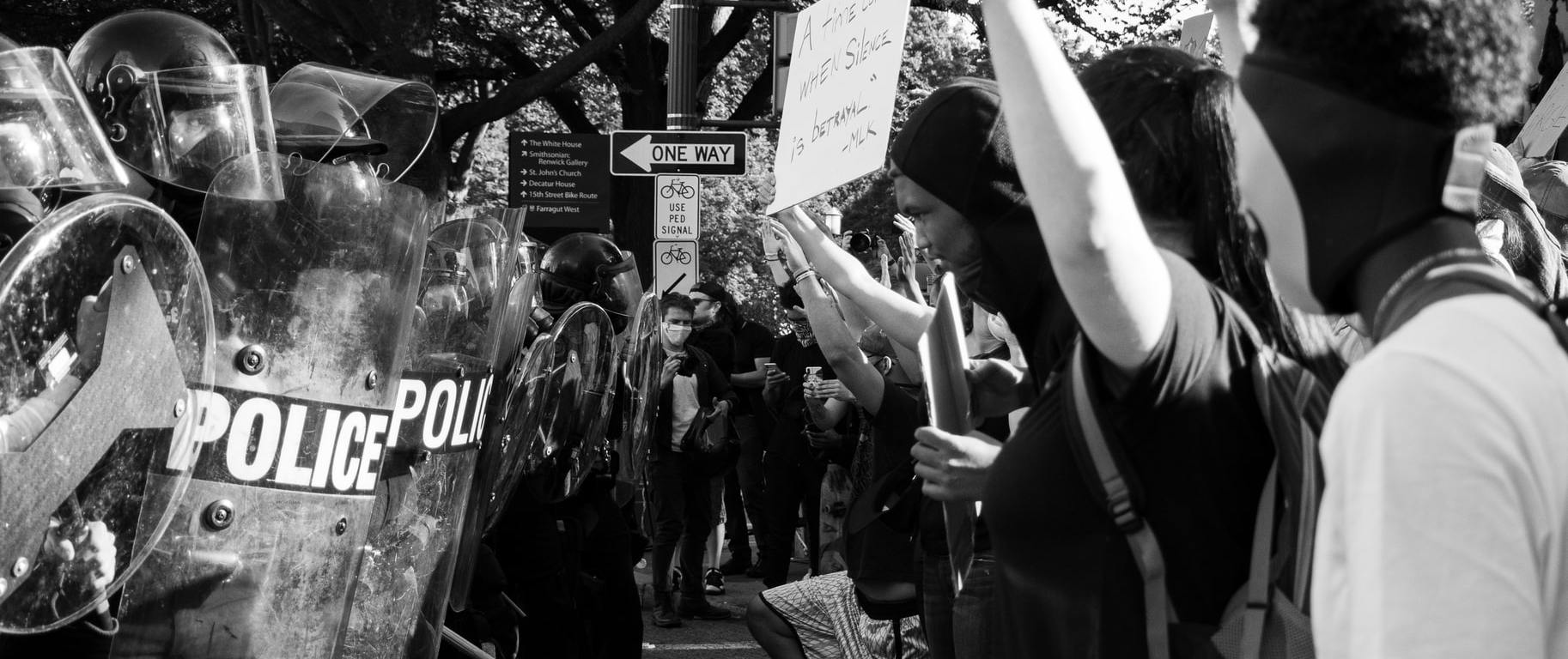
Black Lives Matter itself is a decentralized movement against police brutality and racially motivated violence, not an organization. This means that while these three women founded the movement, you cannot take their politics and apply it to the rest of the movement. This is because they are very radicalized compared to the majority of those supporting the movement, and to not support Black lives due to political differences means you really didn’t care in the first place.
About Patrisse Cullors
Five years ago, Patrisse Khan-Cullors gave a name to a movement that would go on to spark a national conversation and demand a place on the global stage. She co-founded the global Black Lives Matter movement in 2013 after sparking the viral Twitter hashtag. The movement has since then expanded into an international organization with dozens of chapters around the world campaigning against anti-black racism.
Her backstory starts with her recognition of the issues that black people face daily based on her own life and childhood. Her brother was arrested after having a mental health episode and in jail he was beaten and abused so badly to the point where he was unrecognizable. The prison system was built upon the backs of innocent Black people, as evidenced during the War on Drugs. She saw this and began organizing in high school, and she has accomplished so much since then. Patrisse has been on the frontlines of criminal justice reform and led Reform LA Jails’ “Yes on R” campaign, a ballot initiative that passed by a 73% landslide victory in March 2020. She also worked as a Senior Fellow at MomsRising from 2016 to 2018 in which she worked on ground breaking Federal legislation that will change the outcomes of maternal mortality for women, especially Black women.
This further goes to show that many if not all of the civil rights and Black power movements were run by women who get less recognition. These movements would be nowhere without the work of these women, and it is a shame that the deep running sexism in this country hinders so much potential progress. Her book, “When They Call Me a Terrorist” is one of the best books I have ever read. I highly suggest reading it to hear her story and why she decided to put in the work for a better society.
About Alicia Garza
Alicia Garza is a writer and activist who organized around issues related to health, student services, and rights for domestic workers as well as violence against trans and gender nonconforming people of color. Her father is white and Jewish while her mother is Black. She describes herself as a queer social justice advocate.
She has a degree in anthropology and sociology from the University of California in San Diego. In 2009, Garza served as the Executive Director for People Organized to Win Employment Rights (POWER) for the San Francisco Bay Area. In 2011, Garza was also board chair for Right to the City Alliance (RTTC) in Oakland which fought gentrification and police brutality. Currently, she is currently the special projects director for the National Domestic Workers Alliance (NDWA) which strives to get better pay and working conditions for nannies and housekeepers. In addition to this, she serves on the board of directors for the School of Liberation and Unity in Oakland (SOUL). It was her Facebook post that sparked the Black Lives Matter movement after the murder of Trayvon Martin.
About Opal Tometti
Opal Tometi is a globally recognized human rights advocate, strategist, and writer of Nigerian-American descent. As the daughter of Nigerian immigrants, she experienced first hand what it’s like to be black in America and in Arizona. In her youth, Opal launched initiatives to tackle homelessness in Arizona, and in school she led student advocacy and council groups, showcased her Blackness on a competitive step team, and argued passionately on a debate team.
Prior to BLM, she spent eight years as Executive Director at the Black Alliance for Just Immigration (BAJI), an organization that helps black immigrant communities mobilize and advocate for social and economic justice. She worked on reuniting families after the Haitian earthquake in 2010, and challenged unjust deportations. She spoke on behalf of immigrants to the United Nations, at congressional briefings, at the Atlantic Ideas Summit, Harvard and Yale, on the TED stage, and over 100 more stages around the globe. She founded Diaspora rising after wanting to unify the global black community. The digital platform focuses on issues regarding blackness around the world. She worked with Alicia Garza and Patrisse Cullors to found the Black Lives Matter movement, and fight for black lives around the world.
About the Founding of BLM
After the murder of Trayvon Martin, Alicia Garza wrote a series of Facebook posts titled “A Love Letter to Black People,” which included her writing that “I continue to be surprised at how little Black lives matter… stop giving up on Black life.” At the conclusion of her post, Garza ended with an affirmation: “Black people. I love you. I love us. Our lives matter.”
She had met Patrisse Cullors at a conference for the Black Leadership for Organizing and Dignity, and on that facebook post, Patrisse Cullors tagged the term #BlackLivesMatter. The next day, they contacted fellow activist Opal Tometti who brought the movement to social media, and the movement has had bursts in 2016 and 2020, and is now a globally known movement for the protection of Black lives.
NOTE: This article is part of a series celebrating unsung African American heroes. Click here to read about the series and check out the other articles.
 Vidette