
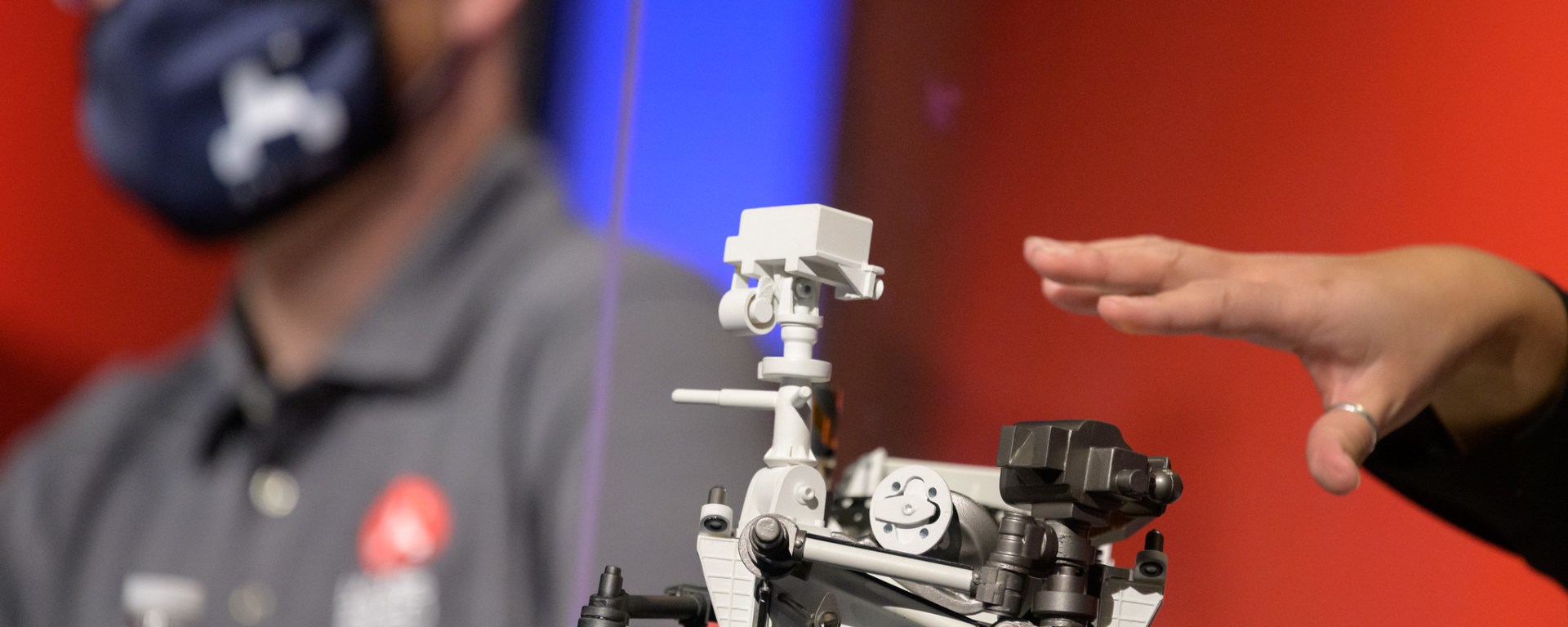
On February, 18 2021, a new NASA rover named Perseverance landed on Mars to explore the planet. It weighs one ton and is ten feet long by nine feet wide and seven feet tall. It’s frame comes with an accompanying helicopter drone called Ingenuity which has about a four pound fuselage the size of a tissue box, a small but mighty piece of equipment.
Perseverance cost 2.4 billion dollars to construct and launch and $300 million to land and operate it for its first year on Mars. This makes it the second most expensive Mars project behind the 2012 rover Curiosity, which was a 2.5 billion dollar project. NASA command communicates with Perseverance through X-band radio waves across 143.92 million miles through space, which is no simple feat. Compared to past rovers, this also may prove to be the most valuable rover yet due to better quality cameras with heat sensors and night vision capability. This improved technology will allow scientists to better study rock formations and other features of the landscape such as craters.
Why is exploring Mars important? Mars is a good place to look for microbial life or any traces of previous life from long ago. Also, Mars offers an opportunity to test new kinds of technology and offers a new frontier for human exploration. Previous Mars exploration rovers like Opportunity found evidence of water and certain types of minerals like jarosite and goethite, among martian rocks and soils.
Scientists are hoping to build on these discoveries about Mars’ geological history, especially in their search for microbial life. Microbial life is important because it is the building block of all other forms of more complex life. So, if scientists can find evidence of microbes on Mars, we will know life is possible on planets other than Earth. Rocks and soil samples will be collected and brought back to earth to better prepare for future explorations, even perhaps a human expedition to Mars.
 Vidette