
Written by staff writer Presleigh Grove.
TW: Sexual and Physical Abuse
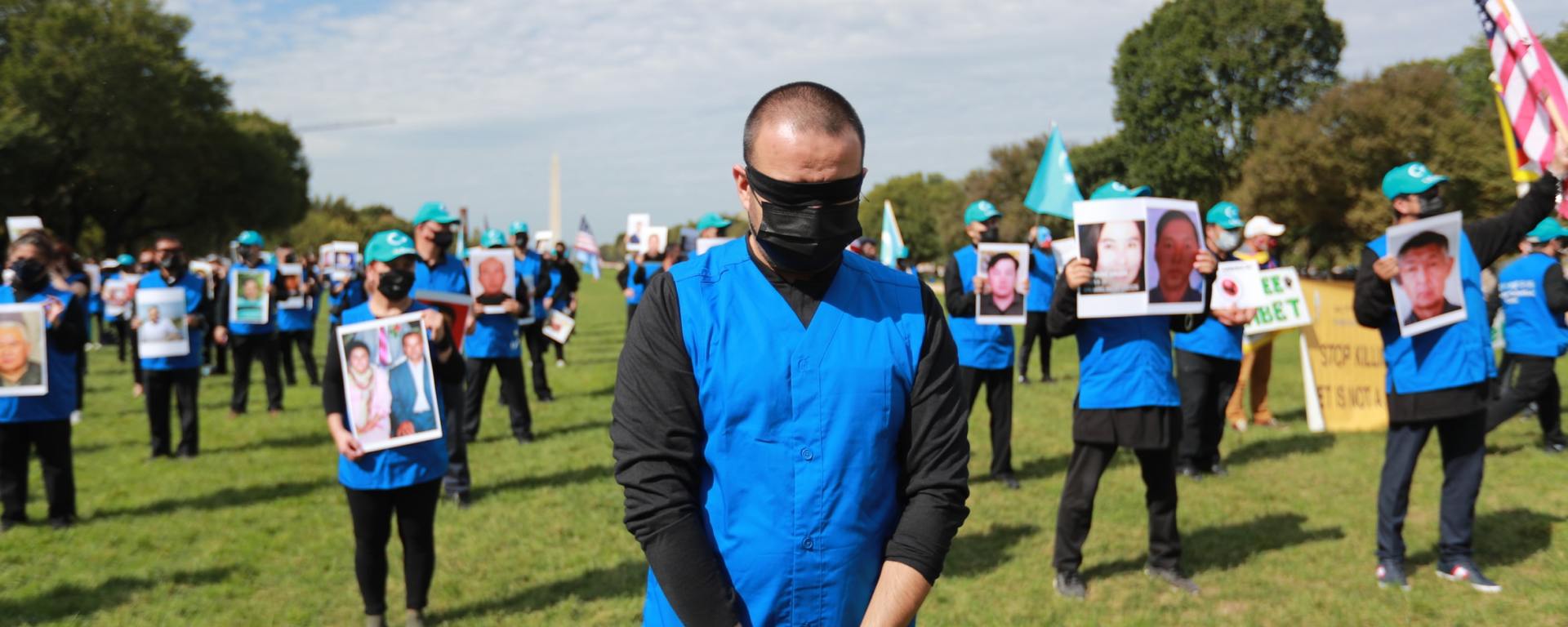
For the past four years, Uyghur muslims have been raped, tortured, murdered and forced to work in off-site factories or worksites in Xinjiang, China. In 2017, these ‘re-education camps’ were put in place to indoctrinate Uyghurs. The People’s Republic of China (PRC) has made countless attempts to dissemble this genocide which could eventually lead to the eradication of the Uyghur population.
The Uyghur people are a turkic-speaking ethnic group native to the Altai Mountains in Central Asia. The Uyghurs once believed in Buddhism, Shamanism and Manicheism, but by the 16th century, Islam became the dominant religion of the people.
In 2014, the ‘people’s war on terror’ policy was announced, a policy meant to fight against the terrorism in China. As a result, the People’s Republic of China put ‘re-education camps’ in place to propagandize Uyghurs and other Muslims.
There are around 1,200 camps. Ostensibly, the motive behind these internment camps are to rid Hui, Uyghur, Tajiks, Uzbeks, Kazakh and Kyrgyz people of terrorist or extremist ideologies. It’s not a coincidence that these are predominatly Muslim ethnic groups. There are believed to be more than 1 million people living in these camps, and according to “The New Yorker Radio Hour,” this is “the largest obtainment of civilians since the holocaust.”
The Muslims living in these camps are forced to denounce their religion and study Marxism, which is the belief that the world is split into classes, the workers and the rich who exploit the workers. They are physically abused in many ways, one of which includes rape. According to Tursunay Ziawudun, a woman who spent nine months in the ‘re-education camps’, the sexual assault of female muslims was not uncommon in the camps. After midnight, men clothed in masks and suits would select women and take them to a “black room.” Ziawudun had been taken multiple nights. She said, “Perhaps this is the most unforgettable scar on me forever…I don’t even want these words to spill from my mouth.”
Uyghurs, as well as other Muslims, are also beaten and tortured. If someone is accused of being ‘disobedient’ then they are ‘interrogated’ or punished. In these interrogations they are beaten, hung from walls, sleep deprived and sometimes locked in what’s called the tiger chair. According to NBC news, the tiger chair is a “steel chair with affixed leg irons and handcuffs that render the body immobile, often in painful positions.” A former prisoner said that he witnessed someone being tortured with the chair. It’s believed that he was being punished for pushing a guard. No one was allowed to help him and he was stuck there for days. The witness told Amnesty, a non-governmental organization, “Two [cuffs] were locked around his wrists and legs… A rubber thing attached to the ribs to make the person [sit] up straight… He would [urinate and defecate] in the chair…We told the guards. They said to clean him. His bottom was wounded. His eyes look unconscious.”
The motive behind the ‘re-education camps’ is simple: money and islamophobia. On top of the physical abuse and sexual assault, forced labor is also a major issue in the camps. The detainees are forced to make things like garments, footwear, hair products, face masks, pharmaceuticals and renewable energy components. Many major brands/companies are linked to the exploitation of these prisoners, some of which include Sephora, Vans, Costco, Fila, and Walmart.
As stated by the U.S DEPARTMENT of STATE, “Detention in these camps is intended to erase ethnic and religious identities under the pretext of “vocational training.”
The PRC has gone through great lengths to hide the conditions of the camps. In 2019, they created a large bonfire to burn prisoner fires and re-education-related documents. It took almost a week. That’s not the only way PRC managed to keep the conditions a secret for so long. If a detainee speaks publicly about the conditions, they are at risk of detention or “disappearance.” After being urged by over 20 member states of the United Nations to release the prisoners, in late July, China announced that most of the prisoners had been released. But this is suspected to be untrue.
Phillip Tai, an associate professor who studies Chinese history, says, “Whether or not they were released, it is undeniable that there is still considerable control and surveillance in Xinjiang.”
 Vidette