
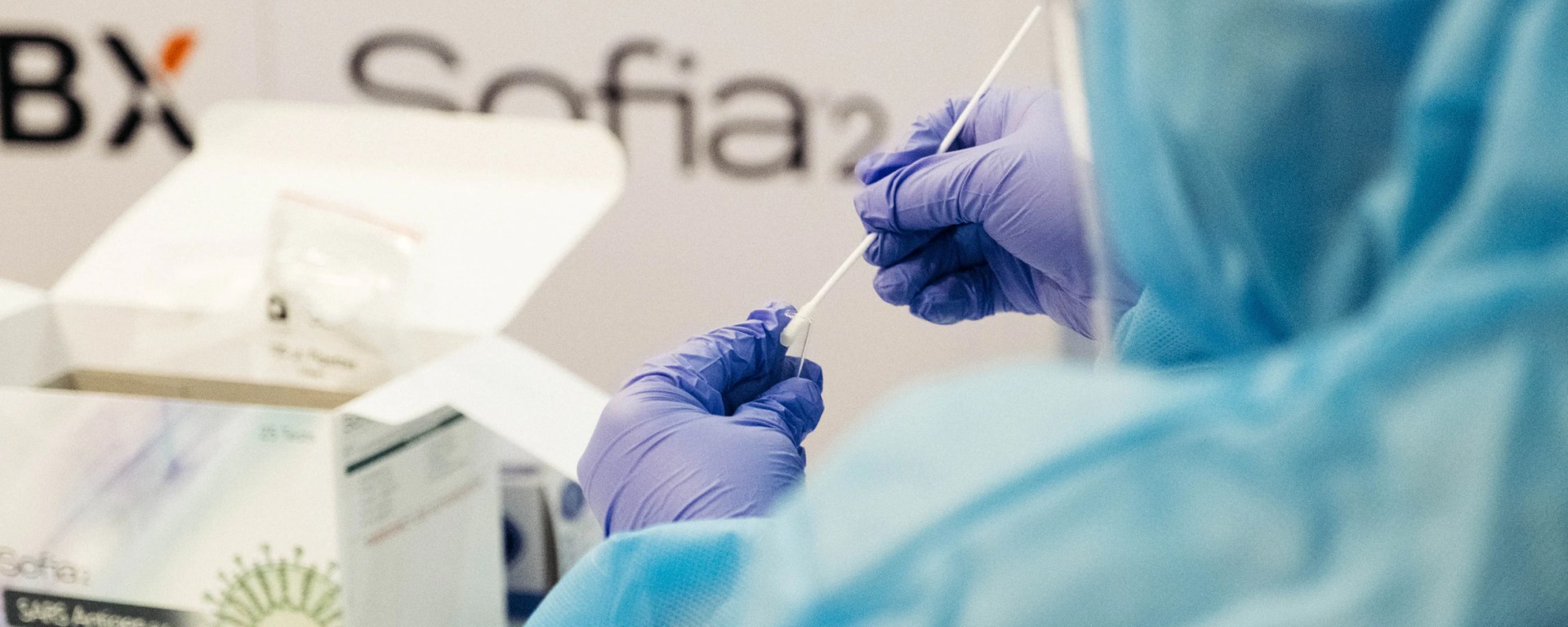
As the world continues to fight off COVID while still attempting to maintain some sense of normalcy, a new variant of the already deadly virus makes its way everywhere with catastrophic effects. The Omicron variant was first discovered in Botswana and South Africa, and since then has spread rapidly, causing hospitals to fill back up and the number of cases to skyrocket once more. Healthcare workers are spread thin and supplies are running low.
Compared to the Delta variant, which also caused a spike in cases, Omicron is two to three times as likely to spread. However, it is less likely to cause a loss of sense of smell and taste compared to other variants. According to an article published by NBC, common symptoms include sore throat, nasal congestion, dry cough, fatigue, and headache.
The spike in COVID cases has also caused a national shortage of COVID tests. The few that are available are expensive, making them inaccessible to most people. There is a program available that provides four free at-home tests per household, however, for some households, this is not enough and it could pose issues for students living in dorms.
In an article from CBS news, Letitia James, New York’s Attorney General, states that her office has received multiple complaints of testing products’ prices being doubled or even tripled. James made a statement in December, saying, “A standard BinaxNOW brand test kit at a New York store, like Walgreens, costs appropriately between $14 and $25 for a package of two tests, however, there has been alleged reports of the same products being unlawfully sold for more than $40 and up to $70 per package.”
The national shortage unfortunately isn’t just limited to COVID tests, as grocery stores are noticeably carrying less items. According to TasteofHome, items like paper goods, canned goods, eggs and meat, pet food, and baby formula are seeing a slow in production due to there not being enough people to make, move and sell the products. With the increase of COVID cases from Omicron and winter weather causing employees to call off. Due to these shortages, stores are putting limits on how many you can buy to manage inventory.
There have been 63,397,935 total COVID cases reported within the United States, with the current seven day average being 782,766. The seven day average has seen a 33.2% increase with the previous being 587,723. Both the Omicron and Delta variants are classified as Variants of Concern (VOC) in the US. The current seven day average for COVID related deaths is 1,729 with a total of 842,873 deaths reported in the United States.
With the sharp increase in cases and COVID related deaths, it is still recommended that masks are worn and people continue to social distance. But stress levels are at an all time high as people are becoming anxious and frustrated. Additionally, more places are beginning to do away with mask mandates, which has only added to the already spiking number of cases.
For information on where to find vaccinations in your area, please visit https://www.vaccines.gov.
 Vidette