
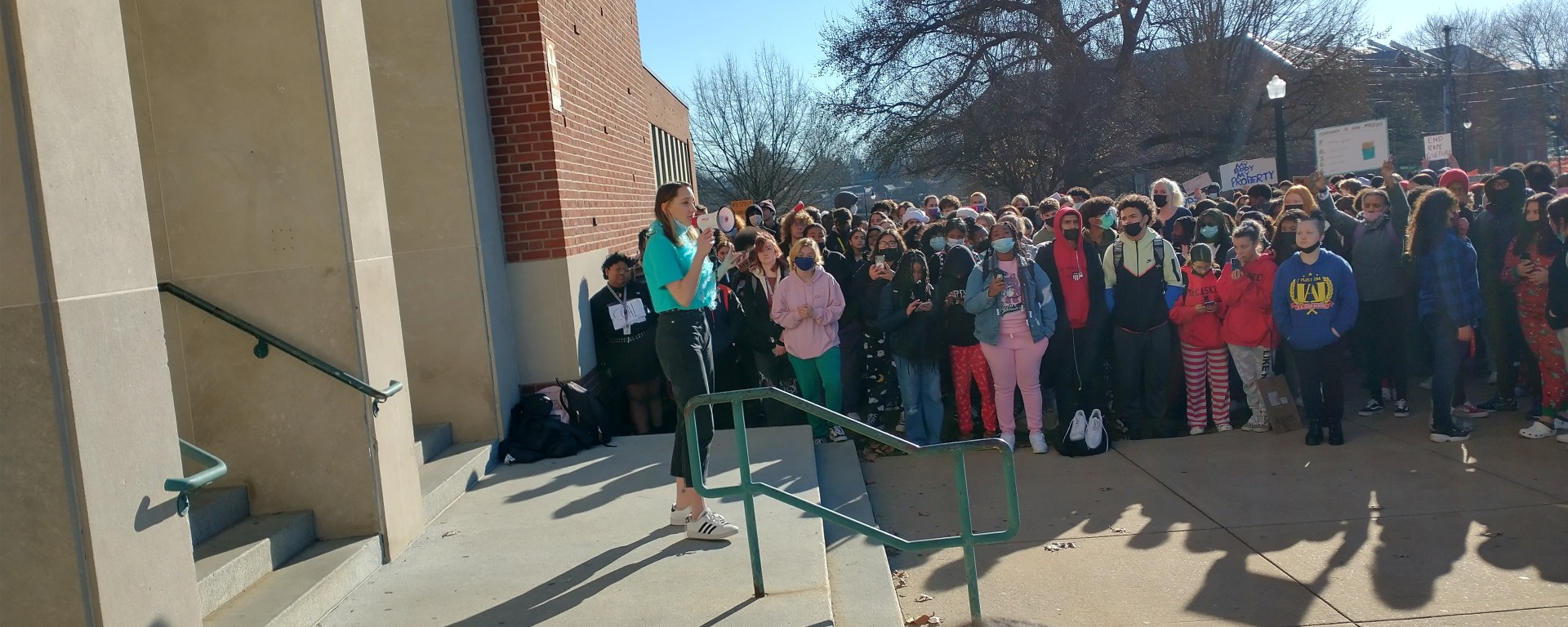
In the midst of the brave individuals that have called out and spoken up about sexual assault (SA) in our McCaskey community, it is more important than ever to believe and support them. Speaking up about rape or SA is not something that comes easily. There are times where the individual will feel alone, depressed, and not speak up because, “who would believe me?” It is up to us as a community to help lift up their voices and not let them be silenced.
What is SA and why is it bad?
When we talk about SA, it’s often seen as an unspeakable topic. People shift in their seats, get nervous, and even avoid conversations involving it as a whole. For the victims, the avoidance starts with emotions. A state of shame, fear, and paranoia can take over. It could take victims months, or even years, to truly speak about their assaults. On the other hand, parents, teachers, and authority figures can also dismiss this. “These things don’t happen in our community,” “My kid is too young to talk about sexual assault,” and, “I know my kid would talk to me,” are all common excuses people teach into their communities. It’s normalized to not talk about assault. Unwanted attention follows, and with that, the cycle of the fear of speaking up all over again. We need to normalize this topic. It’s not something anyone should be ashamed of speaking about.
SA is a term for when someone tries or succeeds in violating you. A sexual stance is most common from touching you after you’ve already said no, to also doing things that make you uncomfortable or uneasy. There are many forms of sexual assault, including indecent behavior, incest, feeling up, child sexual assault, sexual abuse, molestation, and many more terms that can be found on this website. No matter the reason for the assault, it’s not justifiable.
People tend to downplay how many sexual assaults happen every day, and young women are especially at risk. Females ages 16-19 are 4 times more likely to be victims of rape, attempted rape, or sexual assault. Let’s not act like it only happens to them, though. Women, babies, men and boys have all been cases of sexual assult before. It’s a sick thing to think about, but it’s the truth and we can’t shove it off. If you have common sense, you can see why this is immoral and it doesn’t need explaining.
Why do survivors of SA not speak up?
The effects of SA take a heavy toll on many people. Some might think they can understand what goes on, but if you’re not a victim of SA, you don’t truly know how it feels. The heavy feeling of shame that the survivor let anything happen to them dawns in the back of their minds. It isn’t their fault, but society trains them to believe it is. “Why didn’t you push them off?”, “You could have said no”, “You were asking for it with those clothes you were wearing”, “Did they really assault you, or did you not want anyone to find out you slept with them?” are all horrendous things people say to victims. What in their right mind would make anyone want to say that? Do they not see how ignorant they sound? You’re absolutely out of your mind if you agree with any of those sayings. And yet, “placing the blame on the victim comes from old patriarchal beliefs that have been enforced through our education and legal systems and have filtered into our homes and work environments,” says Rosie Motene of People Opposing Women Abuse (POWA).
In the United States, about 43.6% of women and 24.8% of men have experienced some form of sexual violence in their lifetime, according to the National Intimate Partner and Sexual Violence Survey (NISVS). About 21.3% of women surveyed reported completed or attempted rape at some point in their lives, with 1.2% reporting completed or attempted rape in the 12 months preceding the survey. About 2.6% of men reported experiencing completed or attempted rape at some point in their lives. About 81.3% of female victims and 70.8% of male victims experienced their first completed or attempted rape before the age of 25.”
Sexual assault with men and boys, and why it’s shoved under the rug:
When people think of SA, they normally tend to lean towards cases involving women as the victims, but men and boys who have been sexually assaulted experience effects of sexual assault the same as others.
In most cases, they’ll feel as if they were “Not strong enough”. They’ll relate masculinity to the situation, telling themselves that they should have fought them off. “If I could have been stronger”, or “I’m not a real man” are common things that these men and boys can think of. It’s very uncommon for a man to report his rape or SA, due to society’s image on male victims. Many have concerns or questions about sexual orientation, not speaking up about their assault due to fear of judgment or others not beleiving them. 1 in 6 men have faced sexual assault, and an estimated 91% of victims of rape & sexual assault are female and 9% are male. Nearly 99% of perpetrators are male. Why is the system failing these men so badly? Something needs to be done, and we have to do better.
Did you know that most male assaults happen in the military? On average, about 10,000 men are sexually assaulted in the American military each year, according to Pentagon statistics. In recent years, many males are dropping out of the military due to these attacks. “For decades, the fallout from the vast majority of male sexual assaults in uniform was silence: Silence of victims too humiliated to report the crime, silence of authorities unequipped to pursue it, silence of commands that believed no problem existed, and silence of families too ashamed to protest.” This is an eye opener: people still choose to turn a blind eye to this. This community as a whole has to stick up for the men and boys dealing with these situations.
To every male or boy that was sexually assulted, I see you, and I hear you. The community has failed you all so bad. I hope in the near future, this won’t have to be a ‘what if’, but instead it’s not second guessed, and is the first course of action.
What you can do to help:
Helping a victim of sexual assult can all depend on the person, and action they want to take. This might sound cliché, but the best thing to do is listen. Make a safe space for them, and make them feel welcome. In no way would you want to make them feel like they can’t come to you to speak. Depending on the person, ask if they need medical care, and if they’ve done so already. Victims older than 18 years old have 12 years to report sexual assault in Pennsylvania, and victims younger than 18 years old can report the abuse until they turn 50, or 32 years after their 18th birthday regardless of when any abuse occurred. Seeking out options for counseling also can depend, but there are many resources in Lancaster that can help.
For a more detailed and personal way to help, here are some things to remember: believe the victim. The main throw away for people coming out about their assault is when people question and second guess their confessions. 4.5% of people lie about these assaults, and that’s a VERY small percentage. In no way should you assume everyone is a part of this statistic. People like that make it harder for victims to get others to believe them. It is very uncommon that you would run into one of these people. Another thing to remember is to LET THEM TELL WHO THEY WANT TO TELL!! YOU do not get to decide who they tell and who they choose to let into that space. That is none of your business and you should NOT be spreading around their information without their consent!!
A big factor is being patient. Do not think you can one-on-one confront their attacker. Leave it to authorities. The healing process is different for everyone, and it can vary from person to person. They can withdraw from the healing process, or try to isolate themselves. You require patience and an understanding of why you’re helping them. This is not something that comes naturally, or easily. If at any time you need a break, communicate with them, and help yourself. It can be a long process, but if you’re willing to be there every step of the way, then you’re helping more than you think you are.
Links to help:
National Sexual Assault Hotline: 1-800-656-4673: A hotline to help victims finally speak up and report their abuse
If hotlines aren’t for you, there are other options:
The YWCA: Lancaster’s Sexual Assault Counseling Center provides support and advocacy for victim survivors of sexual abuse, for significant others, and for other family members. The goal is to facilitate healing and empowerment for those who have experienced sexual trauma. More info is in the link to their page! RAINN: This website leads to places in Lancaster and Pennsylvania that can help sexual assult/rape victims. It provides centers, therapy and more.
 Vidette