
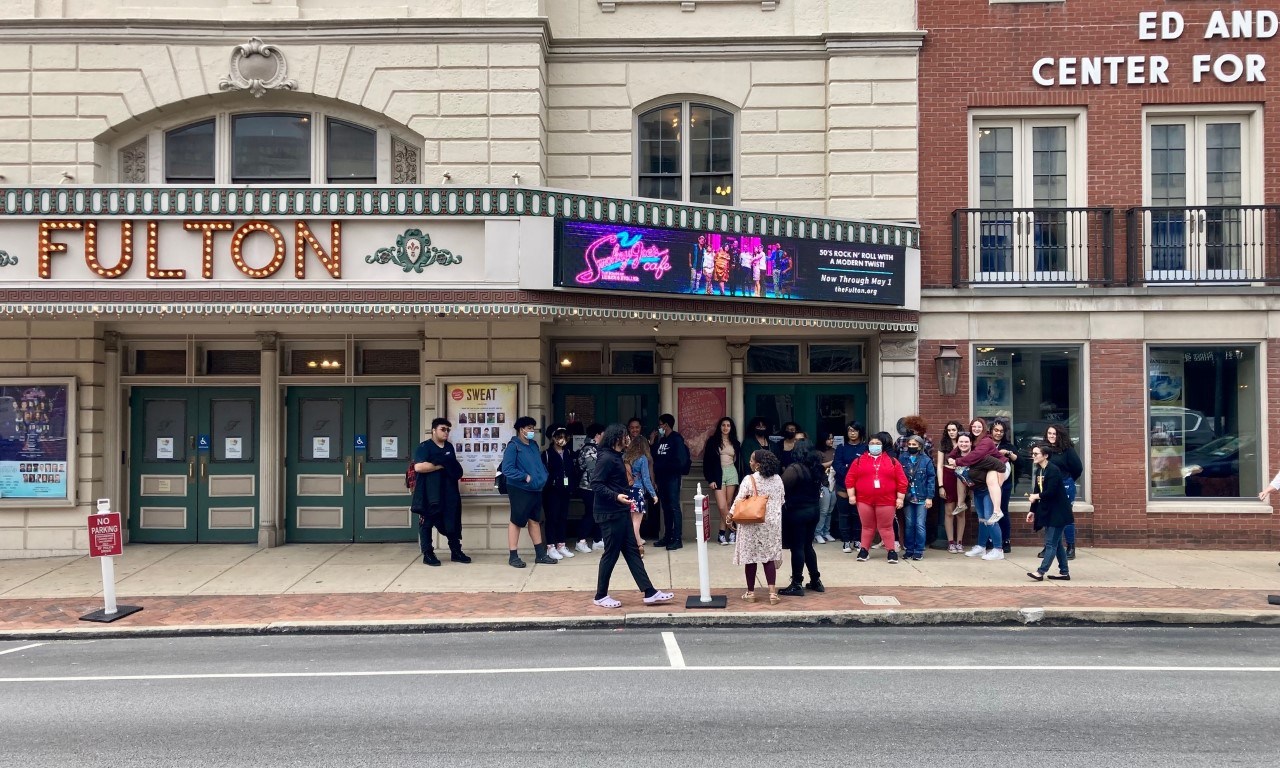
I was given the opportunity to watch the Fulton Theatre’s rendition of Sweat, a play written by Lynn Nottage. Although we weren’t presented with the original cast, the Fulton’s production was able to portray the character’ thoughts and feelings in a way that captivated the audience.
Ms. Gregory and Mr. White invited students from their American Literature classes to see the play with them as a field trip the day before Spring break. Even though it was a last minute decision, I couldn’t have been happier with the outcome.
The main purpose in this trip was to honor an award winning Black author, and engage with the play’s message. It was close to home, both emotionally and geographically, as the play was set in Reading, Pennsylvania. It shows the economic struggles of ordinary working class people and their fight to make a living for them and their families. You could really feel the emotions behind every character and their stories. They all come from different racial backgrounds, but are all reaching towards the same goal.
Lynn Nottage wrote the play during the early 2010’s in the midst of the end of the Great Recession. The story stems from Nottage interviewing real people of Reading about the effects of the residents’ loss due to the economic crash and the loss of good-paying factory jobs under NAFTA, the North American Free Trade Agreement. These interviews gave her a new outlook on life, and the material that inspired her to write SWEAT. The play is framed with a conversation between a patrol officer and two ex-convicts, Jason and Chris. They each tell their own rendition of what happened and why.
The main story takes place in a neighborhood bar, where friends Tracy, Jess, and Cynthia hang out after work. We follow their problems and successes they faced as the company they work for announces its move to Mexico. This decision has put the lives of everyone working for the factory at risk.
During the second half of the play, we’re met with a trivial conversation. Tracy has been promoted to management. This should be a happy moment for everyone, as it brings in better opportunities, but it causes more bad than good.
Tracy was very excited for this position since it means they now have a voice to step up to the company. She worked hard and fought for this job as well as the others did. There’s a stump in the road due to her finding out information late.
The company wasn’t cooperative with her, most likely due to her being a black woman. Her friends, Jess and Cynthia were not happy with this at all. Cynthia expressed that it was unfair due to them all working together at the same time, and they’ve never had that promotion handed to them. The conversation led to a racial issue, with comments made towards her in a negative way. Tracy exclaimed that she was trying the best she could with what she was given, and that they should be happy she’s up there fighting for them to keep their jobs. Although she wanted to stand by her friends, she could not give up this position like they wanted, due to her being a voice for the lower class. Cynthia and Jess then avoided her from that point, with a firm belief that she wasn’t with them nor did she care about their issues since she moved up.
The play really embodies a powerful message that these people’s lives, their struggles and voices, really matter. It felt like more than just a play to me; it was such an out of body experience to see the breakdown of characters, fights, the pain and hurt.
After the show, I got to meet Gabriel Rosario, Oliver’s actor. Throughout the play, I could tell I had a deep connection with this character. Coming from a cultural background, I related heavily to the hate and discrimination towards him. His goals and aspirations were put on hold due to the color of his skin and race.
Towards the end, everyone’s true colors showed. Oliver, at a Place where he thought there was comfort, turned out to be racially divided. I saw myself in his shoes, what I would have done differently, or if I would have stayed silent. Although he faced such discrimination, he still pushed forward. Me and Gabriel had a heartfelt conversation about his character and how we are alike. Same backgrounds, same struggles. When you’re faced with a character in a situation similar to yours, it gives more life to them than I could’ve imagined.
 Vidette