
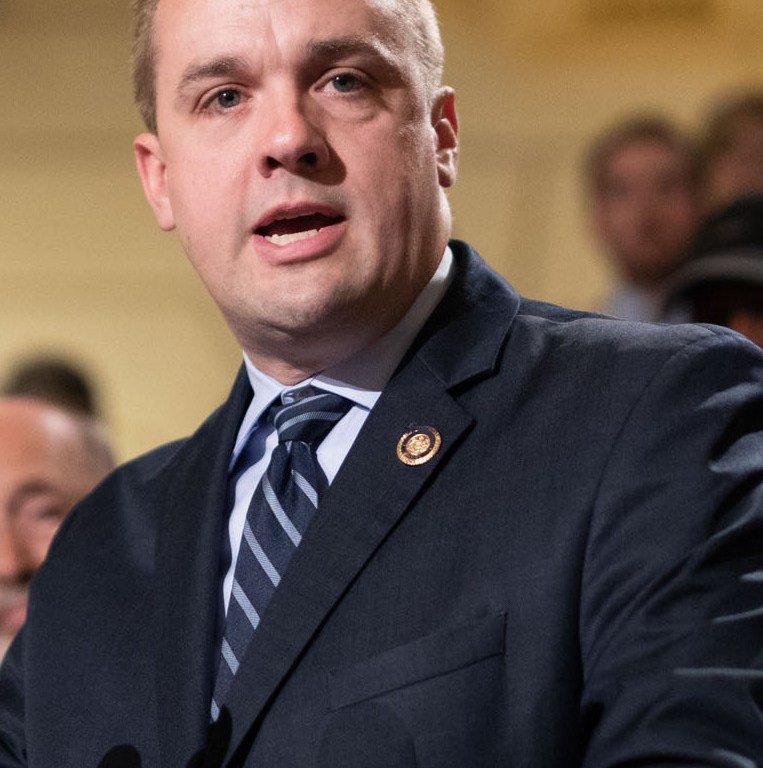
Last Thursday, I attended a student Zoom meeting to discuss education policy with Speaker of the Pennsylvania State House, Bryan Cutler. Tiyya Geiger and I represented McCaskey, and two Pequea Valley students and one Solanco student were also in attendance.
Representative Cutler represents the 100th Legislative District in the PA House, which encompasses part of Lancaster County. Even though his district does not include Lancaster City, his proximity to Pennsylvania’s 8th largest city combined with his prominent role in state politics would lead one to expect that he would have at least a rudimentary knowledge of urban affairs. But not only was Representative Cutler woefully uneducated on the issues that affect our city and school, he expressed no desire to learn. He seemed to embrace his ignorance.
For instance, Tiyya and I posed a question about hiring more teachers of color, especially in urban schools. The percentage of students of color at McCaskey is the same as the percentage of white teachers, meaning that students of color have limited opportunities to see their identities reflected in their educators. Representative Cutler deflected the question, immediately pivoting to a need to hire more male high school teachers. While it’s certainly a problem, rooted in patriarchal stereotypes of women as nurturers, that women dominate in primary education, Cutler’s refusal to engage with a question about racial inequity suggests apathy. He was all too willing to discuss a Pequea Valley student’s proposal that we change the state’s academic calendar to support students in agricultural areas who help out on their families’ farms. But when Tiyya and I asked why Cutler doesn’t support the full implementation of the Fair Funding Formula, which is designed to equitably distribute education funding, he cited our IB Program as justification that the School District of Lancaster receives adequate funding (for reference, we are underfunded by $1,309 per student).
We also broached the topic of racial disparities in school district funding. Cutler’s response? “It’s not about race, it’s about class.” Lower classes of all races are undeniably socially and politically disenfranchised. But there’s a strong correlation between race and class. And if you’re not talking about race when you’re talking about public schools—if you’re actively dismissing systemic racism and its pervasive effects on educational inequity—you’re neglecting your responsibility as a public servant.
It’s easy to roll your eyes, as Tiyya and I did, at Cutler’s comments, and then forget about him. But his denial of the role racism plays in shaping education policy is dangerous. There are clear racial disparities in education funding, and when influential legislators fail to acknowledge them, those inequalities remain entrenched. According to the Fair Funding Formula, 51% of students are currently enrolled in underfunded schools, while the same is true of 78% of Black students and 82% of Hispanic students. Stating that race has nothing to do with public school funding is a blatant lie. But Cutler has demonstrated he’s comfortable with lies, as he subscribed to former President Donald Trump’s debunked claims of election fraud in 2020.
The Fair Funding formula distributes extra dollars to chronically underfunded districts. It applies a similar logic to that behind affirmative action: those who’ve been historically left behind might need a leg up. For example, a poor district without a robust arts program needs more cash than an affluent district with an established program. And while private music lessons and academic tutoring might be the norm for wealthier students in wealthier districts, economically disadvantaged students often rely on their public schools for these resources, in addition to counseling and sometimes even food. This indicates why poor schools in both rural and urban communities need additional funding—they provide essential public services beyond academics.
Prioritizing rural issues over urban issues, as Cutler did during this meeting, is abandoning a majority of the state’s educational needs. Opposing the full implementation of the Fair Funding Formula is abandoning vulnerable students. Refusing to recognize educational racism is abandoning the truth. Politicians with these harmful views aren’t fit to serve in office and they’re hurting schools like ours. We need representatives who will do the work to dismantle inequitable systems instead of singing their praises.
 Vidette