
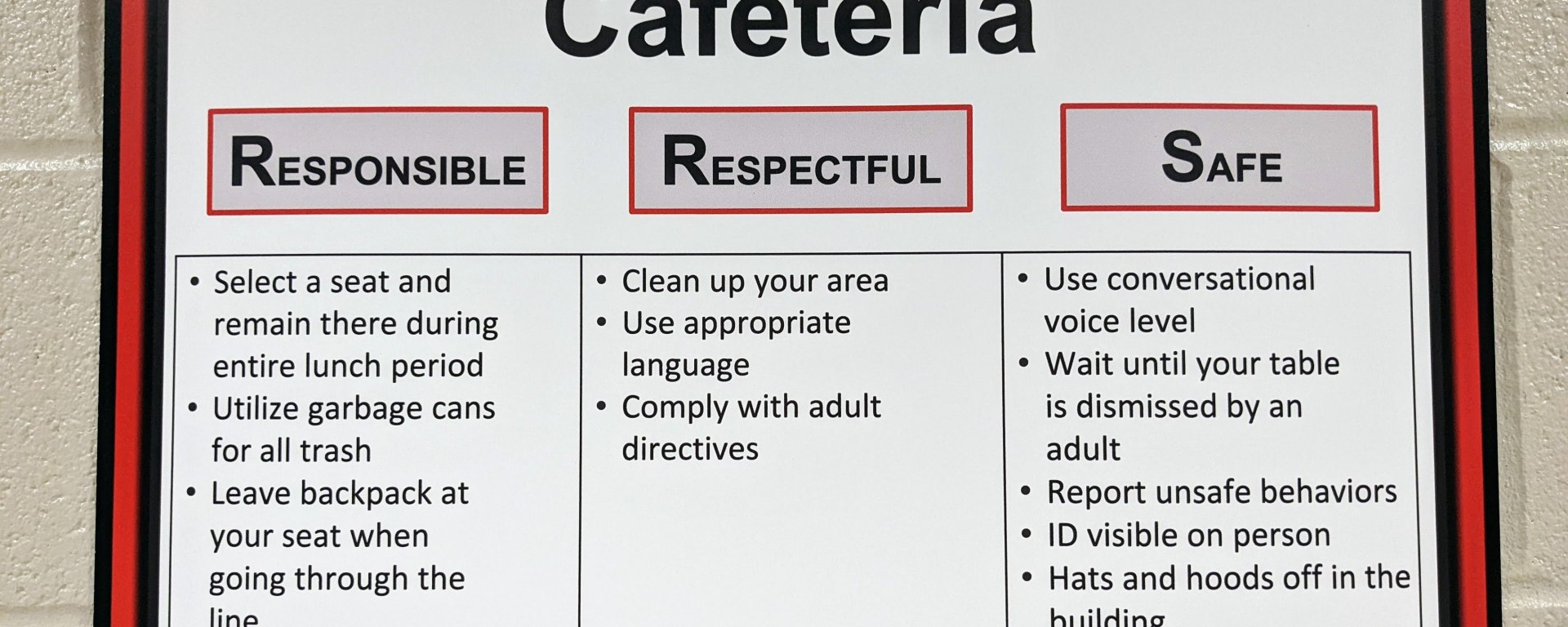
A lot of rules we have to follow may seem like an annoying waste of time. Administrators in the halls can seem like they’re nitpicking or chastising students for no reason. It’s obvious that many rules exist for good for a purpose, like rules against illegal activity or hate speech in the classroom. The motive behind others however, may seem unclear.
Why do we have to show our IDs all the time? Why can we get detention for being 30 seconds late to class? Why can’t we wear ripped jeans? What is the rationale behind the regulations that govern our lives at McCaskey?
In an interview with Mrs. Torres, an associate principal at JP McCaskey, I got some answers about the most commonly questioned (or grumbled about) rules and why they exist.
The dress code was first on the docket, a rule prohibiting a number of types of clothing, including crop tops, strapless tops, shorts above the mid thigh, and, in a similar vein, jeans with tears above the mid-thigh.
Though it is McCaskey that enforces the dress code, it isn’t exactly the schools choice. “The dress code is something that isn’t decided at the school level, and we have a certain freedom to decide some rules, but the district decides others,” says Torres, explaining how her hands are tied. “Whether I agree with it doesn’t matter.”
She goes on to express her opinion on the matter, saying “To me, they’re very simple, the bare minimum expectation.” But why does this rule really exist? I couldn’t seem to get an answer.
Some dress code tenets, such as those that prohibit hate speech or graphic violence on clothing do make sense, but what’s wrong with tube tops and ripped jeans?
IDs are another of the rules students are constantly reminded of. Though all staff members enforce the rule differently, Torres freely admits her leniency with it. “If a student doesn’t have their ID, I just ask for their number. As long as they can tell me that, there’s no problem.”
When asked why we have IDs, Torres addresses the issue of gun violence in schools. “It’s really just intruders,” she says. But do IDs prevent or even reduce the chance of a violent intruder in the school? A 2019 study by the U.S government accountability office shows that half of school shootings from 2009-2019 were committed by students or former students.
Although those students would have methods of building access such as IDs, wearing IDs as a general practice cuts the probability of a school shooting in half. But with staff members enforcing the ID rule inconsistently, the rule feels more arbitrary than a trustworthy security measure.
In addition to IDs and the dress code, getting to class on time is a major point of conflict between students and administrators. Hall sweeps, essentially raids on areas of the school with the most latecomers or class skippers, are a method the administration has used to fight truancy.
Torres breaks down the process, saying, “An administrator and hall monitor team deal with all the students who are late. We bring any latecomers to the auditorium and process the students one at a time.” The rationale behind the hall sweep is simple enough, Mrs. Torres explains, “The hall sweep is a way to clean up, and get kids to class.”
While fear of a hall sweep may encourage students to rush when the bell rings, is rounding up students, taking them to the auditorium and one by one questioning them the way to get them to class faster?
While all school rules are well intentioned, some are evidently more effective than others when every staff member holds a different view on each one. “It’s not ever gonna solve all the problems in the world,” Torres knows, but she cares deeply about students’ well being. “It’s all in place to protect the kids.”
 Vidette