
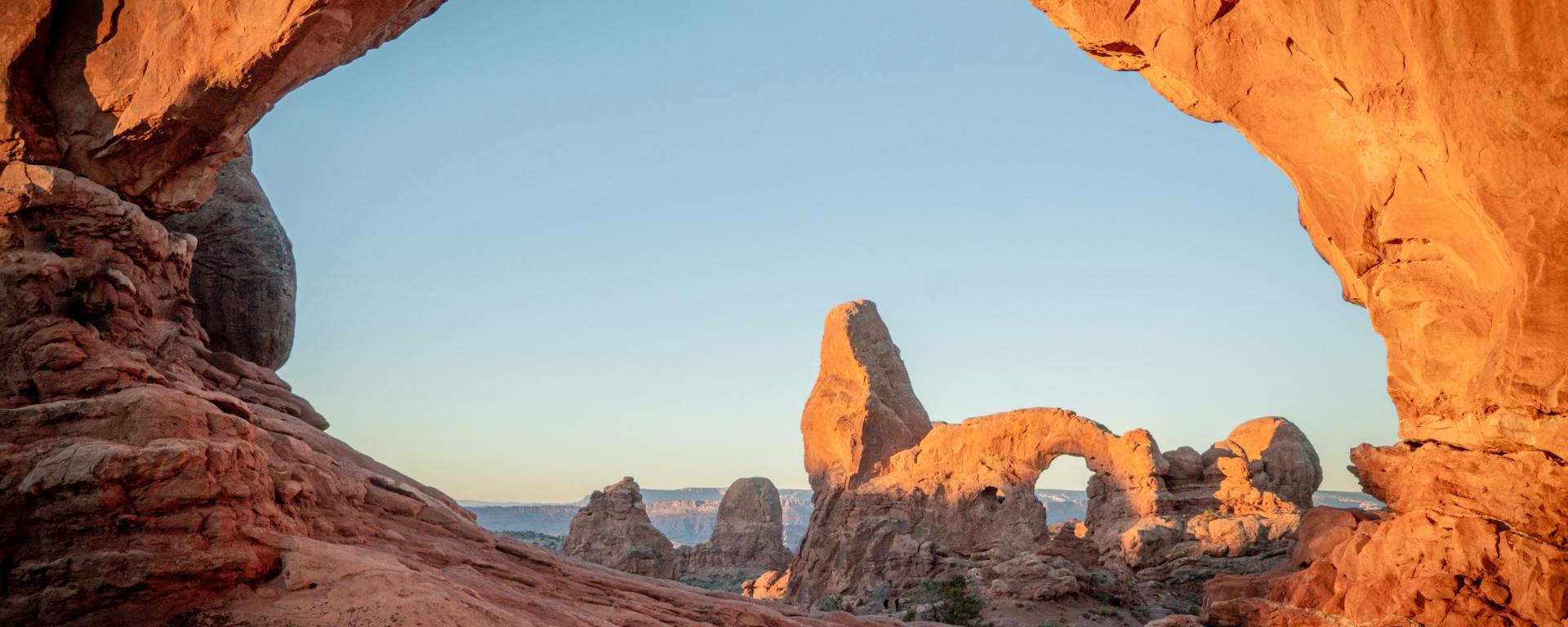
We, the American people, under the encouragement of ceaseless expansion (capitalism) have destroyed or attempted to tame every wild corner of the United States.
Thankfully, this condition of creation, this endless development, was recognized early. President Woodrow Wilson created the National Park Service with the intention of protecting America’s most sensitive and beautiful landscapes. His predecessors, particularly Teddy Roosevelt and Ulysses S. Grant, paved the way for environmental protection under the control of the Federal Government.
The Park Service’s legislative purpose is to ‘Preserve unimpaired the natural and cultural resources and values of the National Park System for the enjoyment, education, and inspiration of this and future generations.’ While the first part of the phrase is crucial (the preservation being an essential duty of the Park Service), what is often overlooked is the second part: ‘For the enjoyment, education, and inspiration of future generations’.
What does enjoyment look like? Where does it impede upon preservation? For the Park Service to do its job correctly it must walk a thin line.
To Edward Abbey, author of Desert Solitaire, that line is crossed with “the bloody tyrant that is the automobile”.
Abbey spent his younger years working in Arches National Monument as a park ranger before it was “developed and improved so well that (he) had to leave.” Desert Solitaire is an embodiment of his time in the desert, the scorch-dry and blistering heat absorbing the reader as if they’re alongside Abbey, traipsing through tumbleweed and rocky canyons.
At the heart of the book is a fervent love for the wild. Abbey argues viciously for National Parks to meet different standards following his three step plan that includes: banning cars and only allowing people to travel by horse or bicycle or foot, building no more new roads in National Parks, and putting the “lazy scheming loafers” (park rangers) to work on the newly car-free roads (now trails) as guides.
Abbey’s book is equal parts snark and passion. He’s quick to the draw with wordplay and facts, never shying away from the points of those who disagree with him. His wit is strong behind the written word, and he wants us to live differently.
He wants weekend trips to National Parks to awaken something in their visitors. He wants to (politely) tear us from the chokehold our vehicles have on us and throw us into nature, into the world that bore us.
Abbey condemns the building of new roads in National Parks. He condemns the paving over of desert sand and mountain stone. He prays, hopes, argues for the National Park Service to remember the first part of their motto. ‘To preserve unimpaired’. To maintain. To protect. How can they continue to protect if every hiking trail becomes a four lane highway? How can they make every beautiful natural sight easy to see and find without paving the way straight to it?
The simple answer? They can’t.
The better answer? They shouldn’t. By making parts of National Parks more wild, by allowing them the protection they deserve (from us and roads) you encourage the American people to do something altogether better than spending tax dollars on asphalt monstrosities. You encourage the American people to stand up, pack their bags and go on a walk. You encourage struggle, self-sufficiency, and reverence for the one thing that every person on this planet should hold in high regard. By making the way to natural beauty challenging you change the experience a visitor gets when they reach their destination.
Suddenly, it’s not getting out of your car and looking up at the South Windows Arch, snapping a picture, shrugging, and hopping back in the car to enjoy the luxury of your air conditioner. It’s not a glance. Instead, it’s taking time (hours, days, take your pick) to make it there, to stand beneath South Windows Arch and remember how you hiked or biked or climbed to get to it. It’s looking up and realizing, this arch, formed by wind and rain and time, is a relic older than human civilization and more important than you will ever know.
These trips, these adventures on foot or bicycle or any way but motorized, would take us back to our roots. Abbey also reminds us that they also wouldn’t be limited to one kind of person.
“These hordes of nonmotorized tourists, hungry for a taste of the difficult, the original, the real, do not consist solely of people young and athletic but also of old folks, fat folks, pale-faced office clerks who can’t tell a rucksack from a haversack, and even children.”
The one thing they share? The one thing that all these wildly different people have in common?
“A refusal to live like sardines in a can.”
 Vidette