
What is the most valuable commodity? Google produced 39,000,000 answers to this question in 0.44 seconds. That eye-popping number of results reveals that the most valuable commodity isn’t gold or oil – it’s our attention.
One of the greatest challenges of the Digital Age is navigating the oversaturation of information. How do we objectively determine whether or not information is true when companies capitalize on our engagement with lies? How do we resist the temptation to buy unnecessary products when we’re inundated with ads that are tailored to our preferences?
In 1971, Herbert A. Simon coined the term “attention economy” to describe this phenomenon. He argued that multitasking does not exist and that “a wealth of information creates a poverty of attention.” Essentially, the more content available to us, the more companies must compete for our attention. Simon also explained that designers of information systems misrepresent their problem as a scarcity of information instead of a scarcity of attention. This causes them to offer an overabundance of information when they should instead develop systems that sift out irrelevant and misleading information.
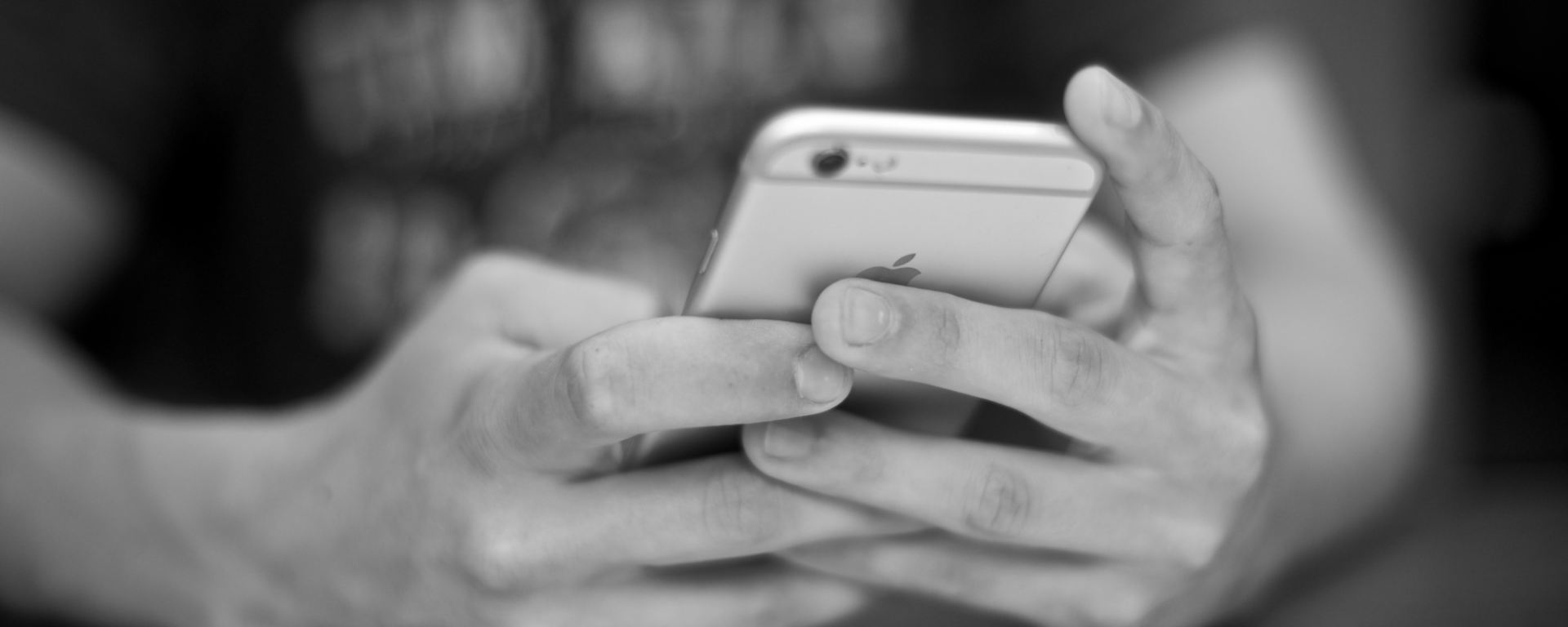
One prominent example of how the attention economy manifests in society is social media. Apps like Instagram, TikTok, and Youtube battle for our attention with “explore” and “for you” pages, autoplay, and recommended videos. This keeps us scrolling indefinitely. And once we’re distracted by shallow web-surfing, it’s remarkably difficult to get back on track. According to UC Irvine Informatics professor Gloria Mark, it takes 23 minutes and 15 seconds on average to regain focus.
But the consequences of social media’s monopoly on our attention are more subtle and dangerous than mere distraction. When we get likes, comments, or notifications from social media, it releases the neurotransmitter dopamine. This generates
a wonderful feeling, but it also bolsters our desire to reproduce that feeling, which creates a feedback loop. In some people, this pursuit of dopamine can become so extreme that it mimics the effects of drug or alcohol addiction. In 2019, 40% of American internet users ages 18-22 reported feelings of addiction to social media. In essence, the attention economy is making us sick.
The attention economy also fuels capitalistic excesses by promoting targeted marketing schemes. For example, a significant portion of Facebook’s $7.05 per user revenue comes from advertisements, which are customized based on location, profile, and demographic information. Our attention is being sold to advertisers so they can sell us products. Advertisers collect enormous amounts of data from our online behavior, such as what posts we like, what information we search for, and how much time we spend on different websites and apps. They are able to manipulate our consumption habits because they know us disturbingly well. One study found that a computer algorithm can determine more about an individual’s personality than their friends can by evaluating 70 “likes,” more than their family from 150 “likes,” and more than their spouse from 300 “likes.”
The attention economy facilitates a “marketplace of ideas,” which can be dangerous because it elevates the ideas that garner the most attention, not those that have the greatest truth value. Recent revelations about Fox News exemplify this threat. In a deposition, Rupert Murdoch, chairman of the media company that owns Fox News, conceded that several Fox anchors publicly promoted lies about the U.S. 2020 presidential election while denouncing the falsehoods off the air. Why did a news organization neglect their responsibility to tell the truth? Lies captured their viewers’ attention. On election night in 2020, Fox became the first news outlet to project Joe Biden as the winner of Arizona. But when this caused a steep decline in ratings, Fox began to peddle conspiracy theories about widespread voter fraud involving Dominion voting machines.
So the attention economy is detrimental to our productivity, our mental health, and perhaps most importantly, our society’s ability to distinguish between facts and lies. What can we do about it? One of the significant debates about the attention economy revolves around how much agency we as consumers have. On the one hand, we have the free will to turn off our screens. On the other hand, our brains have been manipulated to keep scrolling. It’s important to remember that the internet can’t make decisions for us. We choose what to buy and what news stories to believe. So the next time you add a trendy product that popped up in Instagram ads to your cart, allow Youtube to autoplay another video, or click on an article for its outlandish claims, remember someone is making a profit on your gullibility.
 Vidette