
by Tiyya Geiger
During the week of October 16, 2023, McCaskey was under lockdown three separate times.
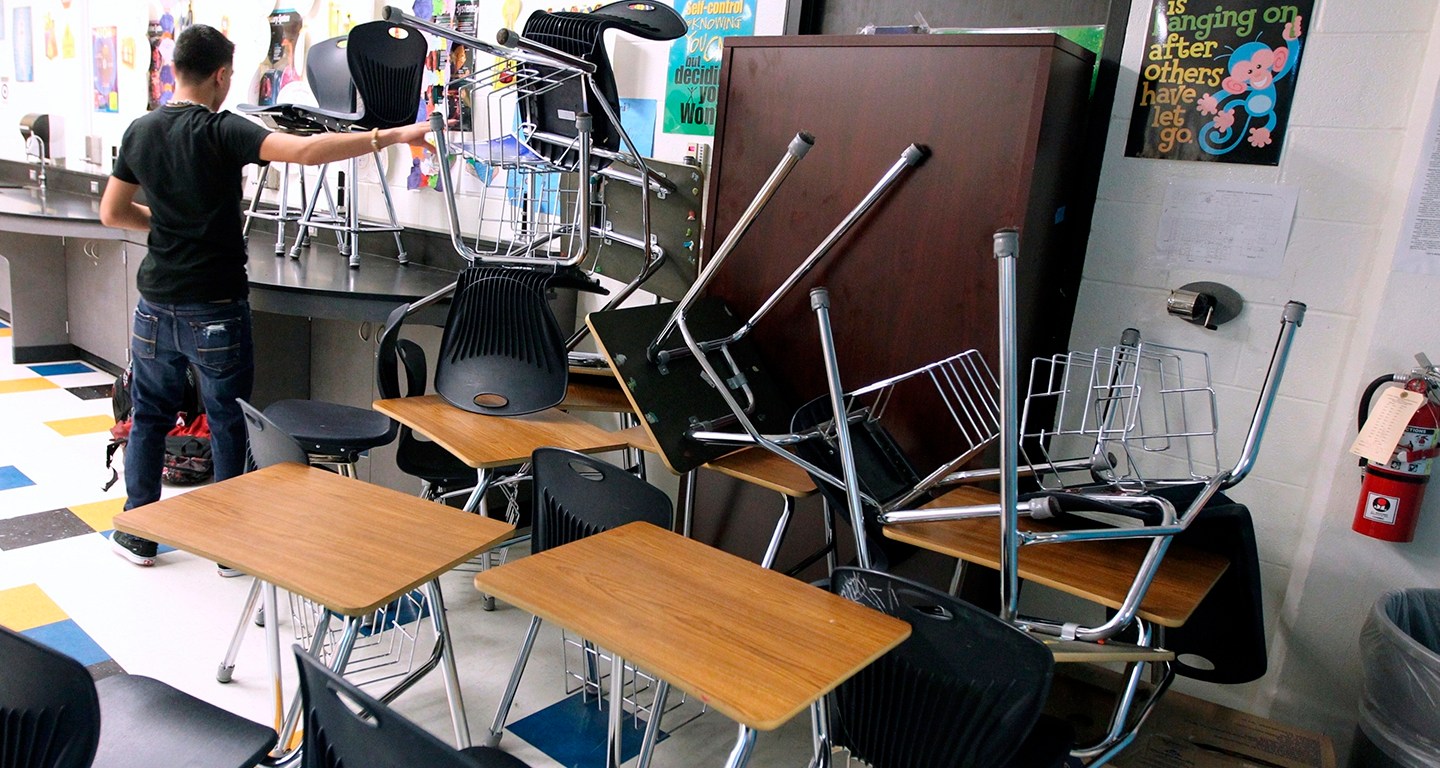
As national investigations regarding the links between increased access to assault weapons and increased violence continue, it is important to understand what lockdowns are and how they impact McCaskey as a whole. Lockdowns at McCaskey are characterized by the coexistence of dissipating anxiety and increasing desensitization to violence, a troubling attitude that is echoed in schools throughout the country.
As of November 2023, we have had 6 lockdowns this school year alone. Two in September, four in October, and all but one was external. According to Dr. Reese, these statistics are average compared with previous years.
In an interview with Officer King, McCaskey’s School Resource Officer, he defined the difference between internal and external lockdowns. External lockdowns mean there has been a “violent incident outside of school in close proximity to the building,” causing the administration to make the decision to shut down all movement inside and outside the building. While a threat’s severity is being determined, the school will be shut down whether we know students are involved or not—that means no traveling, and instruction continues.
During an internal lockdown, something dangerous is occurring inside the school, and the entire school must stop motion to track down the source of the problem. McCaskey’s only internal lockdown occurred on September 13. Although previously students were not made aware about school incidents of violence, in this case the administration announced that the cause of the lockdown was the discovery of a gun in a student’s possession at East.
Surprisingly, lockdowns have generally caused little to no disturbance in classrooms. Teachers continue their regularly scheduled lessons during lockdowns, with students desensitized to the possibility of violence on campus. According to Mrs. Brumbach, teaching through the lockdowns may even be beneficial to student morale: “students can remain more calm and just know that they cannot travel at that time outside of the classroom.” It seems that the knowledge that class will continue may soothe the anxiety that students may otherwise experience if they are unaware of the lockdowns’ cause.
The general student body seems to be unconcerned about their sense of safety. They generally feel safe at school and lockdowns have become a joking matter—whether this is a result of desensitization or a coping mechanism can be debated, but one can consider the psychological impact of how lockdowns are first thought when they hear the announcement bell. An anonymous student explained, “A classroom wide jitter can be felt at the ring of the bell as students try to make light of the situation by jokingly say[ing] ‘we are now on lockdown,” at the sound.
Lockdowns are no longer a source of contention between the student body as we get farther away from the self-isolation that the COVID-19 pandemic placed us in. The youth are becoming increasingly politically and socially aware during a time of mass media intake with the growing prominence of the internet, and the more students are exposed to, the more accustomed to the idea of violence they become.
As students are increasingly desensitized to lockdowns, which are only becoming more frequent, the possible long term effects on the American psyche should not be overlooked. The anxiety around lockdowns won’t go away no matter how desensitized we are and there are no amount of jokes that will replace the fear we hold with calm. What we can do is take steps to understand how lockdowns impact the psychological health of students, and implore legislators to take steps to reduce the possibility of school violence through the legislature.
If student’s ever feel unsafe or know about something that could help others, it is important to talk to a trusted adult. It is important to remember that lockdowns are a precautionary measure, one that could not happen without the collaboration of students, teachers, and administration to minimize risk. The best thing that all of us can do is listen and speak up when needed. In the end, we are a community, and we have to look out for one another. It is up to us to understand and work for the change we want to see, which starts by protecting one another at school.
 Vidette