
By Nemari Morales
Social media and news sources within the United States have been bursting with daily updates, insights, and conversation about the ongoing Israel-Hamas conflict in Gaza. Choosing to educate themselves, some have expressed support for Palestine by participating in the BDS Movement, others believing the movement to be anti-Semitic. But, many remain clueless as to what is happening in other parts of the world, and are wondering—what is this movement, and why are so many people following it?
The BDS Movement was founded 18 years ago on July 9th, 2005. The acronym stands for “Boycott, Divestment and Sanctions”, and is described by bdsmovement.net as “a Palestinian-led movement for freedom, justice and equality.”
The movement calls people to action, guiding them on what brands and/or companies have shown support towards Israel or have connections to it in order to boycott them. Some of these companies include popular brands like Disney, Coca-Cola, McDonalds, Burger King, Taco Bell, Starbucks, Puma, X(formerly twitter), and even Amazon. In response, various companies have cut ties with Israel and associations, such as Puma terminating their sponsorship of the IFA (Israel Football Association) as of the end of their 2024 contract. The CEO of McDonalds, Chris Kempczinski, has also released a letter on LinkedIn referring to the backlash as “disheartening and ill-founded”. Various other companies have remained silent towards the issue, though it has become very apparent that boycotting efforts are negatively impacting companies.
Despite numerous campaigns that have been expected to bring in revenue, including the launch of a new red cup, Starbucks has dropped nearly 12 billion dollars in market value. X (formerly twitter) is also observed to have taken some hits, estimated to have lost nearly 1.5 Billion dollars in ad revenue. Yet, with all being said, many people are confused as to why support of Israel is being deemed unethical, and many have even referred to the movement as “anti-Semitic.”
The Israel-Palestine conflict has been going on for decades, but worldwide coverage of the war has skyrocket with the October 7th Hamas attack on Israel, displacing 1.4 million people in Gaza. The attack was orchestrated long before it had finally been launched, Hamas claiming the attack was over Israel policy, and more specifically over violent outbreaks at the Al-Asqa Mosque and general inhumane treatment towards Palestinians.
Following the attack, Israel formally declared war against Hamas and began a deadly blockade, preventing both food and fuel from reaching anybody in the Gaza Strip, home to 2.3 million people. Bombings have continued, many in Gaza suffering with no access to any sort of medical care, food, clean water, electricity, and even shelter. The death toll of Palestinians was recorded to be around 17,487 following the end of a week-long truce on December 1st, 2023. About 70% of the dead were stated to be women or children. Thousands of bodies remain trapped underneath the rubble, and the count has been recorded to increase each day.
As for America’s position on the matter, President Joe Biden has released a statement sharing support for Israel, but his views do not align with that of every American. More than 1869 pro-Palestinian protests have take place in America as of December 15th, 2023, and widely-known universities such as Harvard are experiencing tensions on campus regarding the war. Students and staff alike have lost positions, engaged in conflict and even had their home addresses and personal information revealed by students with opposing views. Even students within our own campus have strong opinions on the matter, willing to engage in protests or debates on the subject.
Within our society, it is important to stay informed of the matters happening across the world. For all we know, it could be one of our loved ones in such a tragedy.
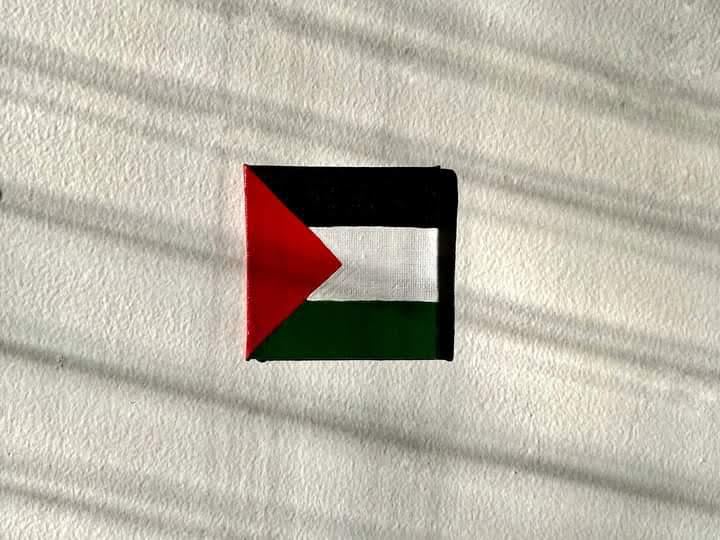
(Painting & Photography by Belinda Matilla, junior at J.P. McCaskey High School)
 Vidette