
By Elisabeth Palacios
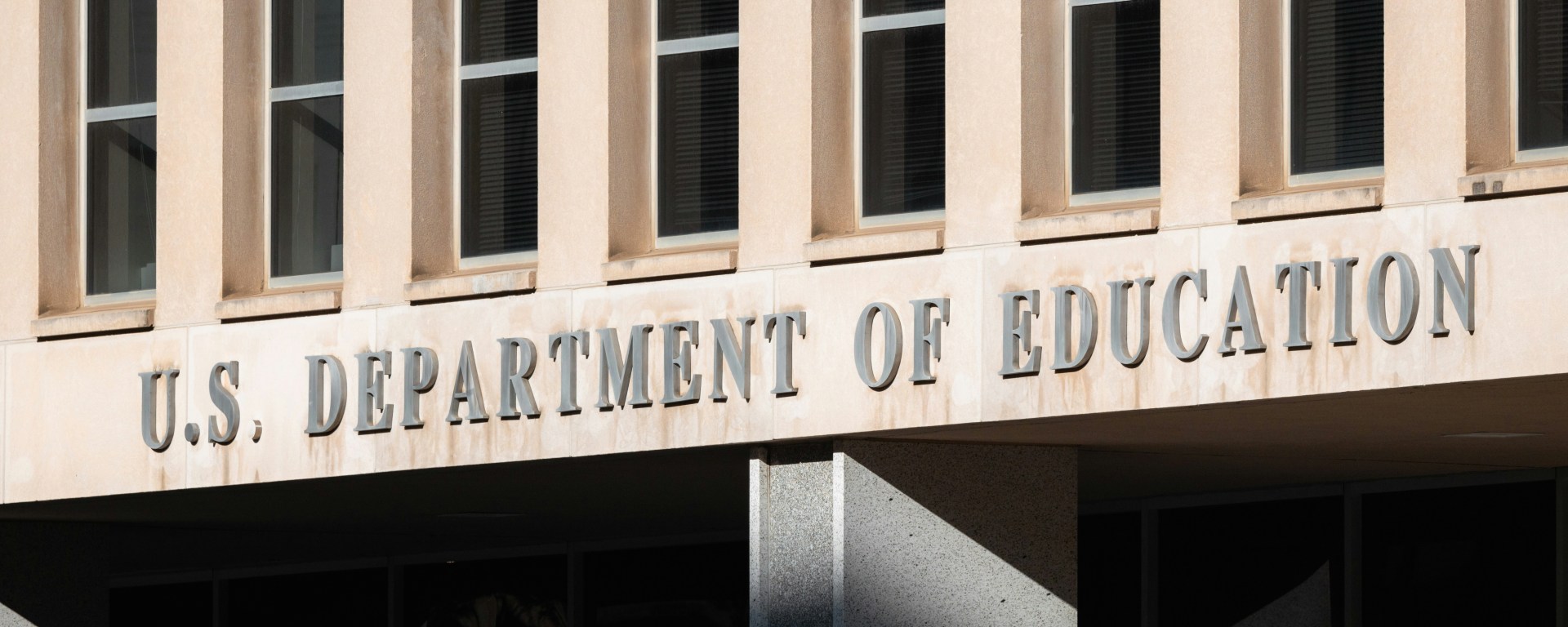
The U.S Department of Education has been a part of the federal government since 1980, serving about 50 million students in America. President Donald Trump plans to get rid of it, as many from the Republican Party have tried to in the past.
The Department of Education (ED) is “the agency of the federal government that establishes policy for, administers and coordinates most federal assistance to education,” according to their official website. Despite Trump’s main motivation for eliminating the department being to “return education to the states,” the department does not actually control the curriculum, or school rules nationwide. State and local governments account for 90% of school funds and have control over most school policies.
However, the department is responsible for providing federal grants and enforcing civil rights laws in schools. Two significant grants that directly help McCaskey are the $18.4 billion Title I funding for K-12 schools, where at least 40% of enrolled students are from low-income families, and the $15.5 billion program for education for students with disabilities.
In fact, the School District of Lancaster receives the most federal funding in Lancaster County: an estimated $27,730,000, 10% of their total revenue, while other districts get about 1-3%. Without the department, our school and many others would lose this funding completely and would have to provide the same quality of education with just state and local funding.
As for enforcing civil rights laws, the department ensures that there cannot be any discrimination against students in schools due to race, sex, gender, economic status, etc. Students that are a part of minorities that face prejudice could be subject to unequal opportunities and lower quality education if the department is abolished—once again, depending upon state and local education laws.
Although it would take more effort to enforce, Pennsylvania has had the ‘Human Relations Act’ in place since 1955, which addresses and outlaws “certain practices of discrimination because of race, color, religious creed, ancestry, age or national origin by employers, employment agencies, labor organizations and others.” Of course, federal law overrides any contradicting state laws. However, if the department is solely abolished, there would be no federal laws directly overriding this act (as of now). It can still protect students in PA from discrimination in schools, but the state would have to do more in order to ensure that all districts are following it.
Trump cannot abolish the department on his own, however. The executive branch needs congressional approval to shut down an agency’s operations, as well as at least 60 votes from the Senate. This already makes abolishing the department more difficult to do, but it becomes more difficult when acknowledging the implications of what this would mean for the Trump Administration.
Trump and his administration have been very vocal about the changes he wants to make in nation-wide education, including cutting down DEI (diversity, equity, and inclusion) programs and fighting against anti-semetism on all (but mainly university) campuses. Rick Hess, the director of the Education Policy Studies at the American Enterprise Institute, says, “a lot of the other promises Trump made… require using some of the machinery at the [Education] department.” Since it would be counterintuitive to do so, there is a chance the department will not be such a big target.
Trump has not made any direct comments about the future of the Department of Education nor any attempts to dismantle it since his inauguration on January 20th. However, with the plethora of executive orders he signed that same day, he has already retaliated against the Biden Administration’s attempts to broaden Title IX’s discrimination protections to transgender students in schools. He signed an order that makes it U.S policy for only two sexes to be recognized, which would already obligate the Department of Education to change their ways of applying Title IX laws moving forward.
It is difficult to see where the next 4 years will lead our local, state, and nation-wide education, but there is no doubt that it is already on its way to changing substantially from what it is now.
 Vidette