
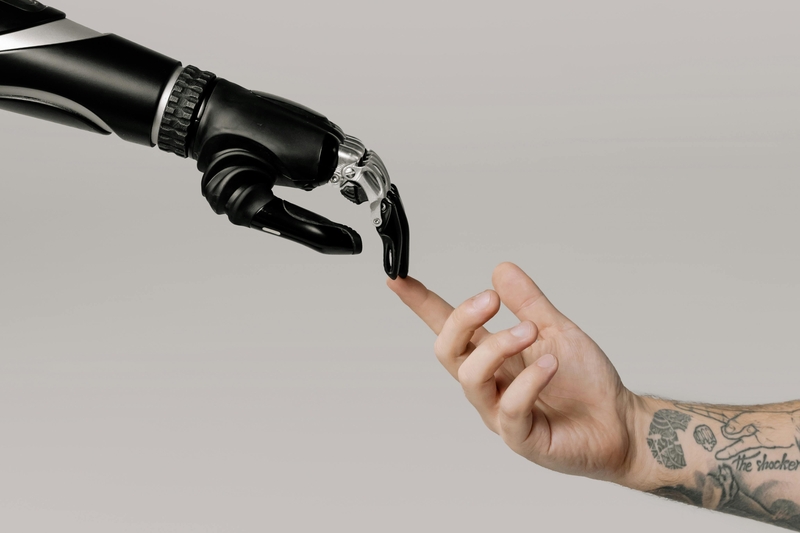
Artificial intelligence has quickly become the technology of the century. It has developed to the point where it can complete essentially any written task at a human level faster than any of us could have ever imagined. However, most people do not understand the effects of artificial intelligence and how it works. As a result, it is necessary to educate people on what artificial intelligence actually is and how it affects the world.
Before beginning, what is artificial intelligence? The term has been thrown around aimlessly as a buzzword, and not many people understand it. Artificial intelligence is the creation of machine systems that are meant to mimic human intelligence. A good example of this is having AI write an essay or an email. Now that artificial intelligence has been defined, the focus will shift to its development and real-world effects.
The Development of Artificial Intelligence
To understand the role of AI in society today, it is essential to explain its development. In 1949, Alan Turing presented his famous method of assessing the intelligence of a computer, now known as the Turing Test. The test itself compares how a computer performs a task to how a human does. If a computer can successfully imitate a human-level response, then the computer passes the Turing test. Eventually, the Turing test would become the benchmark for what modern large language models, or artificial intelligence models designed to generate content using language the model can understand, are capable of. Companies refer to their goal of advancing these models as artificial general intelligence, or the ability of computers to perform any task at a near-human level, and these artificial intelligence companies have come close to achieving this goal by developing their large language models.
Recently, there have been many breakthroughs in the world of AI. Think of technologies like Google, which analyzes a query and provides informative pieces of information you can read to answer your question. However, this type of artificial intelligence is not the one making headlines in the news; generative AI is. Generative artificial intelligence is a form of AI that, rather than analyzing information and regurgitating it like Google, takes already known information and builds a response on its own. Think ChatGPT and Gemini, which are known as large language models for their ability to generate text-based responses. But how were these models developed?
Artificial intelligence models, such as ChatGPT, Gemini, and Deepseek, use a process called “machine learning” to develop their models. Machine learning is the process of feeding information to computers so they can improve their ability to complete tasks. Think about how ChatGPT is trained on the human knowledge it is fed. Every company that develops a large language model develops it through machine learning, which will be important later when data centers are mentioned. Now it is time to dive into the four major large language models used today.
The Four Major Artificial Intelligence Large Language Models
The most popular larger language model is ChatGPT, which is currently on version GPT-5. ChatGPT was the first major large language model to be released to the public, debuting on Nov. 30, 2022. The model itself (GPT-5) is widely regarded as one of the best models currently available, capable of performing tasks such as coding or revising an email better than most other models can as of right now. McCaskey Sophomore Dung Huynh added that ChatGPT can be used to “learn and complete tasks”, displaying its practical utility as a tool. However, OpenAI, the company developing ChatGPT, has and continues to spend and lose billions of dollars on the model, which is a stark contrast to the next model.
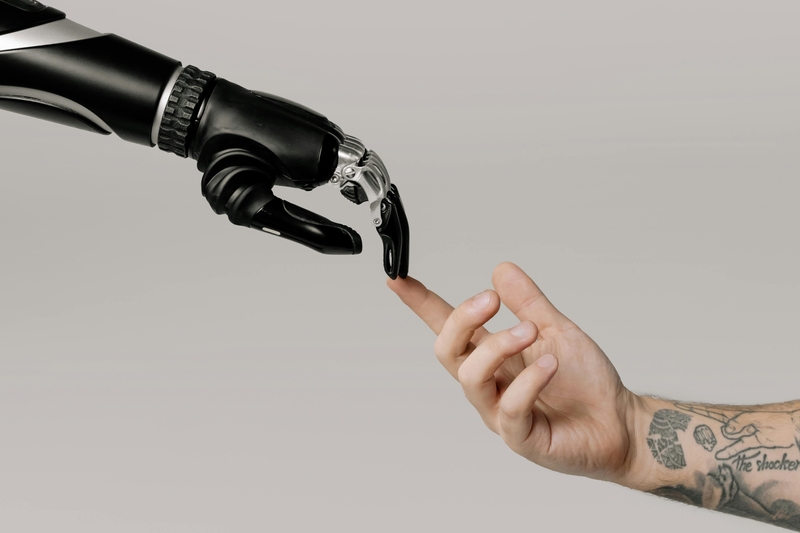
One of the most intriguing artificial intelligence models does not even come from the United States, but rather from China. DeepSeek, founded by Chinese hedge fund High-Flyer, has quickly emerged as a worthy competitor to OpenAI’s model ChatGPT. Deepseek first appeared in the artificial intelligence scene on Jan. 20, 2025, when it released its first major large language model, Deepseek R1. The model completely shook Western markets due to its high capabilities and low development cost, being around $6 million compared to the $100+ million it took to develop OpenAI’s GPT4. What really shocked everyone was the fact that DeepSeek R1 could perform many of the same tasks ChatGPT could, despite having a significantly lower development cost. People had not expected an innovation like R1 this early, demonstrating China’s technological prowess to Western countries. As a result, Western companies now have real competition in the realm of AI. Overall, the launch of Deepseek has signified the beginnings of an artificial intelligence development race between the United States and China, which, as the release of Deepseek R1 has shown, may not be as one-sided as previously assumed.
Claude, developed by Anthropic, is not as well-known as ChatGPT or Deepseek, but it has made a name for itself among large language models. Claude, which was originally released in March 2023, was not a great model. It worked, but ChatGPT outclassed the model at this point. The turning point for Claude came on Sept. 29, 2025, when they released their most impressive model to date, Claude Sonnet 4.5. Sonnet 4.5 excels in coding and mathematics to the point where no other model competes with it at this point. This is due to Sonnet’s ability to critically analyze information better than any other model can, allowing it to excel in areas such as those mentioned earlier. Overall, Claude has proven to be an interesting shake-up to the currently ChatGPT-dominated AI market.
Google’s Gemini, which has been integrated into the technologies of millions, has proved itself to be one of the most important models. The current model of Gemini, Gemini 2.5 pro, has proven to be impressively human-like. The model was among the most human-like models, scoring higher on the LMArena test, which tests how human the responses of a large language model are, than any other model at the time. Gemini has even been incorporated into Google search itself, offering an AI overview for every Google search, offering a time-saving summary for users. Gemini has also been integrated into the Android operating system as a voice assistant, offering high-level answers that other voice assistants, such as Apple’s Siri, currently cannot compete with.
All four of these AI models provide users with high-quality answers that are generally correct. Models like these have changed the way people research, shifting research from searching for sources themselves to having sources found and summarized for them. Any written task can now be performed at almost the same level as a human can thanks to these models. But why does any of this matter? How have these models affected the world and education? How will they continue to influence the world in the future?
The Real-World Effects of AI
AI is now so widespread that most people regularly interact with it. According to a study conducted by the Pew Research Center, 62% of Americans interact with AI in some form several times a week. Data like this shows how widespread AI actually is, but why does any of this matter? After all, AI should be like all technologies where the impact is majority positive, right? Well, this is not entirely the case, and a study conducted by the MIT Media Lab shows the concerning effects AI can have on its users.
In 2025, MIT released a study that detailed the effects of AI on the brains of its users. The results showed that people who used AI had lower levels of creativity and were not as equipped to think critically as those who did not use AI to complete tasks for them regularly. In their own words, students who routinely made use of ChatGPT to complete tasks for them have “consistently underperformed at neural, linguistic, and behavioral levels.” McCaskey Junior Sofia Escudero added that AI is “ruining the creativity in people’s minds.” Overall, the ever-growing presence of artificial intelligence across the world may have detrimental effects in the realm of education, as shown by this study.
The copiously large amounts of investment into artificial intelligence infrastructure also bring up valid concerns. Currently, artificial intelligence companies generally keep their financial reports private. Companies like OpenAI and Anthropic fit this mold. Billions of dollars have been spent on these models, and no return on investment has been made on them thus far. This brings about the discussion of a possibility that artificial intelligence has caused a market bubble and may pop within the next few years, causing a recession that will affect all in the United States.
On Nov. 6, 2025, OpenAI CEO Sam Altman would make a statement during a podcast about this situation. He said, “When something gets sufficiently huge, whether or not they are on paper. The federal government is kind of the insurer of last resort, as we’ve seen in various financial crises.” Altman’s statement raised significant financial concerns, as he was implying that the AI market may currently be in a financial bubble and may require government aid in the near future. Concerns over this AI bubble have caused Altman to deal with criticism from people concerned about the financial logistics of AI, mostly on social media.
President Trump would also bring up the concerns over an AI bubble on Nov. 7, 2025. When asked about whether or not he was concerned about an AI bubble, he would state, “No, I love AI, I think it’s going to be very helpful. So many things are happening with it.” What Trump failed to mention is that Nvidia has bubbled in its market cap over the past few years, quickly becoming the largest company in the world due to the mass buying of its chips for AI. While at first, this may just seem like regular business, mass increases in the market caps of companies, like in the case of Nvidia, are usually indicators of incoming crashes, as was the case for Oracle and Intel in 2000 when their companies bubbled in value.
Nvidia CEO Jensen Huang would bring up another issue in the world of AI that, in his eyes, is a problem. He believes that China is “nanoseconds behind America in AI.” While this may seem inconsequential, after all, it is just AI, this connects back to the point about the AI bubble. If China really is nanoseconds behind the United States in AI development, an economic crisis could put the United States behind China in AI, and possibly, in turn, monetary and technological power as a whole. An event like this occurring is crucial because it represents an ideological shift in the world, going from being led by the ideologically center-right United States of America to the far-left People’s Republic of China.
Another large concern with AI is energy consumption. The data centers required to run American AI models require copious amounts of energy to operate, and the amounts are concerning. According to an article from Fortune magazine, OpenAI will consume a similar amount of energy to the combined energy output of New York City and San Diego. This totals to about 17 gigawatts of energy consumed per year, which is comparable to about 20% of the entire Texas energy grid. The operating costs for these data centers are high, and it may not be feasible to continue training AI models at this scale, considering the costs.
Circling back to education, AI has found its way into McCaskey High School. Many students use AI in school, often through cheating in ways such as generating essays for them. AI is also used ethically in McCaskey, usually to explain topics to confused students. Sophomore and co-president of the new McCaskey Debate Club, Justice Keller, offered some insight into the presence of artificial intelligence in McCaskey High School. He himself admitted to using AI for academic reasons, but to “actually learn and come up with new ideas.” He would also note that he has seen students at McCaskey use AI to cheat on assignments rather than using it ethically, which poses a threat to critical thinking at McCaskey High School, as students will lose the ability to think critically if they are not working for the answers themselves.
While the use of AI to cheat has become a problem in McCaskey, the ethical uses of the technology are also present within the school. AI provides students with a new way to study and learn through its intuitive summaries and coding. Many students in McCaskey have responsibly used AI to generate practice quizzes in preparation for assessments. Now that the effects of AI have been discussed, how will AI affect the
world in the future?
The Future of AI
Artificial intelligence really is just getting started. Large amounts of money will continue to be put into the development of AI in the hopes of it eventually turning a profit. Developing AI in the future will likely continue to come through the mass building of data centers, which, as stated earlier, take up a lot of money and energy to operate.
Despite these concerns, Meta recently announced plans to invest $600 billion into building AI infrastructure, such as data centers, over the next few years. Spending this much money at this pace only exacerbates concerns over an economic bubble that could alter the lives of millions if it bursts. Statements like Meta’s show that AI companies are more worried about achieving AGI than preventing total economic collapse, which is worrisome.
As the capabilities of AI increase, its influence will as well. Growing this influence is one of the reasons companies like Meta are investing hundreds of billions into AI in the first place. Their goal is to create the next big model that everyone will use. The influence of AI is already widespread, reaching every corner of the world. Even within McCaskey, the use of ChatGPT is widespread, regardless of the ethics of its use.
Overall, the future outlook for AI is quite mixed. The development of AI is accelerating, and as a result, the technology is expected to continue improving. However, concerns over high spending and the real-world effects AI will have are valid. Hundreds of billions of dollars are going to be spent on developing AI while millions of people in the United States are struggling to pay their bills. In addition, students nationwide, including at McCaskey, are using AI to cheat in school, and the problem will only get worse as the influence of AI increases.
To round things out, AI has proved to be both beneficial and harmful to many aspects of everyday life. Everybody either uses AI or has at least heard of it. Ultimately, only time will tell whether AI proves to be a net benefit to society.
 Vidette