
In 2011, Mexico experienced one of the worst humanitarian atrocities in the country’s history. The Los Zetas cartel, an organized crime group in Mexico, would carry out the slaughtering of over three hundred people. The cartel’s justification for this massacre of innocent lives was that the victims were DEA informants along with their families. Whether or not this was true did not matter. What mattered was the loss of innocent lives that could have been saved, and what happened next. According to witness reports, the police director of Allende Mexico requested that police officers “not do anything or say anything” in response to the Allende massacre. In addition, more witnesses reported that the chief of the Allende branch of Los Zetas frequently made visits to the Allende police station after the massacre, knowing he would go unpunished! As the witnesses said, it was “like he was in his own house.” Cartel stories like that of the Allende Massacre show the deep control cartels hold over Mexico. After all, why would a cartel boss willingly walk into a police station after orchestrating one of the most brutal massacres of human life in Mexican history without knowing he would walk out a free man? Stories like this are common throughout Mexico. There was a palpable sense that the cartels had total control over Mexico. As a result, Mexico would eventually have to address cartel operations, which would eventually end up in the killing of cartel boss El Mencho.
For some more context, cartels have been plaguing Mexico for decades. According to Statista, Mexico experienced over 28,000 homicides in 2020 alone. One of the largest cartels that has been killing innocents and facilitating the movement of drugs has been the Jalisco New Generation Cartel, or the CJNG for short. The CJNG controls key areas of Mexico around Mexico City and along the Gulf Coast, providing it with a suburban base of operations and large markets to sell to. A map showing the control CJNG and other cartels have over Mexico as of 2024 is shown below.
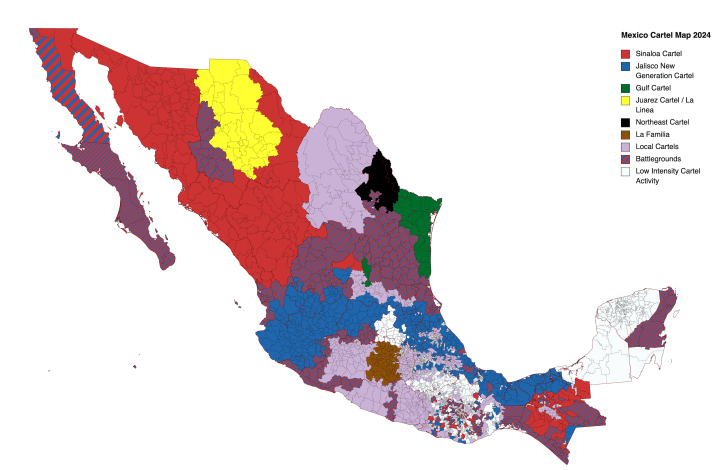
An Image detailing cartel control in Mexico. (Ioan Grillo).
During an interview, McCaskey history teacher Mr. Painton discussed cartels and how they rose to the control they now exercise. Mr. Painton argues that the growth of Mexican cartels can be directly attributed to the “250-plus-year history of the United States intervening with Mexican affairs. And creating harsh economic conditions for the people. Things like the Mexican-American War. A more contemporary example would be NAFTA (a trade agreement between Mexico, the USA, and Canada to remove tariffs and increase trade among the three countries), which has left many people in economic despair and led them to say, “Okay, well, what else can I do?” I can starve. I can work in a maquiladora (a Mexican manufacturing factory) for 49 cents an hour like my brother-in-law did. I can walk across the border and get crap shot, killed, or even harassed while I’m there. And or I could work for the cartels. So I believe the cartels are a direct result, at least their success and their popularity are a direct result of U.S. foreign intervention in their country for a couple hundred years.”
In simpler terms, Mr. Painton believes that American meddling in Mexico has created harsh conditions, forcing Mexicans to resort to opportunities like cartel work if it means having a chance in life. Yet, working-class Mexicans would not just sit idly by and watch the effects of American meddling, such as cartels, destroy Mexico. Eventually, they would elect a new leader who promised change.

A picture of McCaskey history teacher Mr. Painton.
On the third of June, 2024, Mexico would elect a socialist named Claudia Sheinbaum as its president. Sheinbaum promised that she would be “the bravest president, a president tough on crime.” At first, she failed to hold up her promises. Cartel leaders stayed both free and powerful while the Mexicans suffered. When cartel leaders were captured, their successors were already predetermined and put into power. However, all of this would change on Feb. 22, 2026.
Hours before the crack of dawn on this fateful day, Mexico would carry out one of its largest actions against the cartels to date. With intelligence help from the United States, they killed the leader of the CJNG, El Mencho. The leader of Mexico’s second-largest cartel had finally met justice, albeit through murderous means. McCaskey student Sky Soriano added that murder was not necessary, stating that she “feels like the country should do whatever they need to do for the country’s benefit so that they can get better, but I don’t think that murdering El Mencho would be the right idea to do so, even though it might benefit the country.”
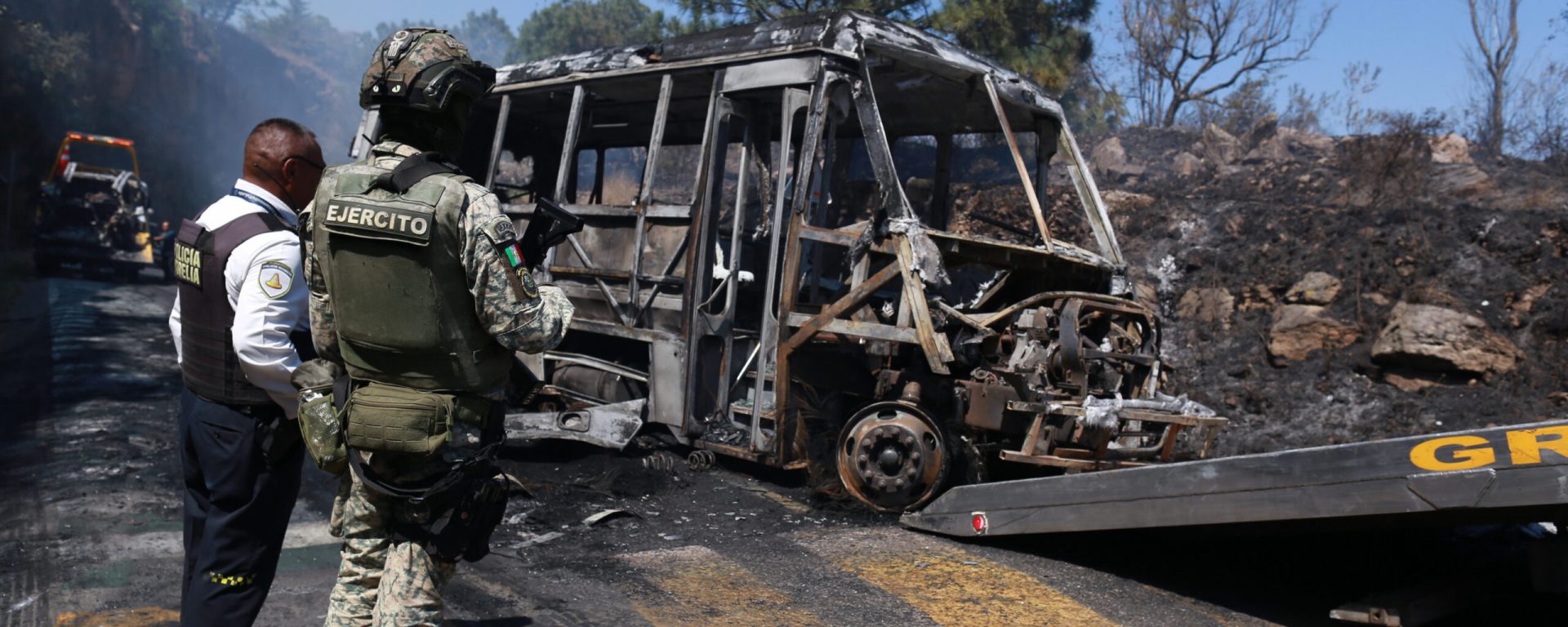
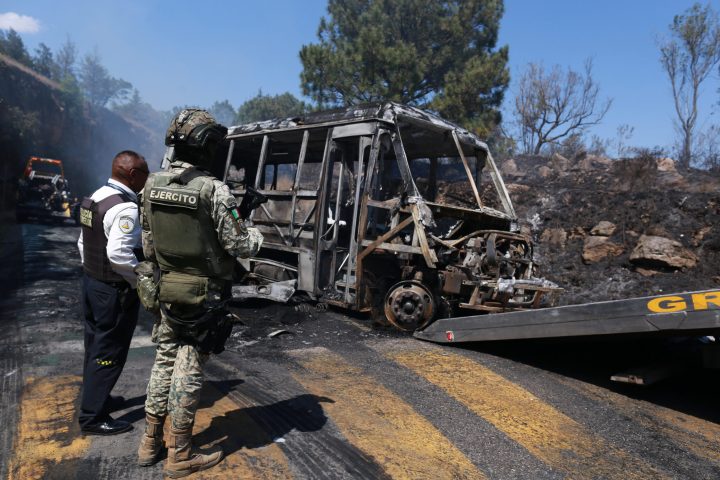
After the killing of El Mencho, chaos would ensue. The CJNG, enraged at the news of their dead leader, fought back. Cars were burned, roads were closed and barricades were enforced by cartels, among many other retaliatory actions. Overall, the instant effects of El Mencho’s killing were palpably visible through the means of retaliatory violence. But how will it affect Mexico as a whole in the long term? Or even the United States and McCaskey? Mr. Painton would touch on these topics during his interview.
Starting with long-term effects on Mexico, Mr. Painton argued that he “Definitely thinks that the next person up (next person in line to be leader) takes over, and that’s the way it’s always been. And as long as there’s a demand, they will meet that. And as long as there are no better alternatives for people to survive economically, then it will continue. And until those things change, it doesn’t matter. They could kill 100 people, and the next 100 people will step up into that position.” Simply put, Mr. Painton does not believe much change is coming for Mexico—and that’s completely understandable! For decades, cartels have had their leaders arrested, and like clockwork, their replacements are picked. McCaskey sophomore Gabriel Martinez-Hidalgo added that “Hopefully it benefits Mexico in the long term. But looking at the immediate aftermath, like I know they were like blowing up cars, blowing up gas stations, things of the sort, which like in places like Jalisco and Veracruz, which are obviously very concerning, and something should be done about that. But if the goal was to get, like, kind of like stop cartels, right? I feel like it would have to be done one way or the other.”
As for long-term effects the killing of El Mencho would have in the United States and McCaskey, it is imperative to emphasize the fact that the base of operations for the CJNG is far away. Unlike the Sinaloa cartel, the CJNG does not operate directly on the border between Mexico and the United States. However, this does not mean they are not profiting from selling drugs to the United States. According to therecoveryvillage.com, Mexican cartels such as CJNG make an estimated $19-$28 billion dollars off of selling drugs to the United States. Getting rid of even one major cartel leader would cause instability, as the killing of El Mencho did, in turn reducing the cross-border selling of drugs into the United States and possibly into McCaskey as a whole.
Cartels are a big problem in Mexico. That goes without saying and cannot be argued. The recent killing of El Mencho by Mexican authorities provides hope to Mexicans that their government will finally rid Mexico of the parasite that cartels have become. Despite this newfound hope, there is also a strong sense of doubt, as people like Mr. Painton believe that nothing will change and that a new leader will be selected to lead the CJNG. In the end, the killing of El Mencho is a step up from what Mexico was doing to fight cartels previously, but only time will tell whether or not the killing of Él Mencho will be the beginning of the end for the Mexican cartels.
 Vidette