
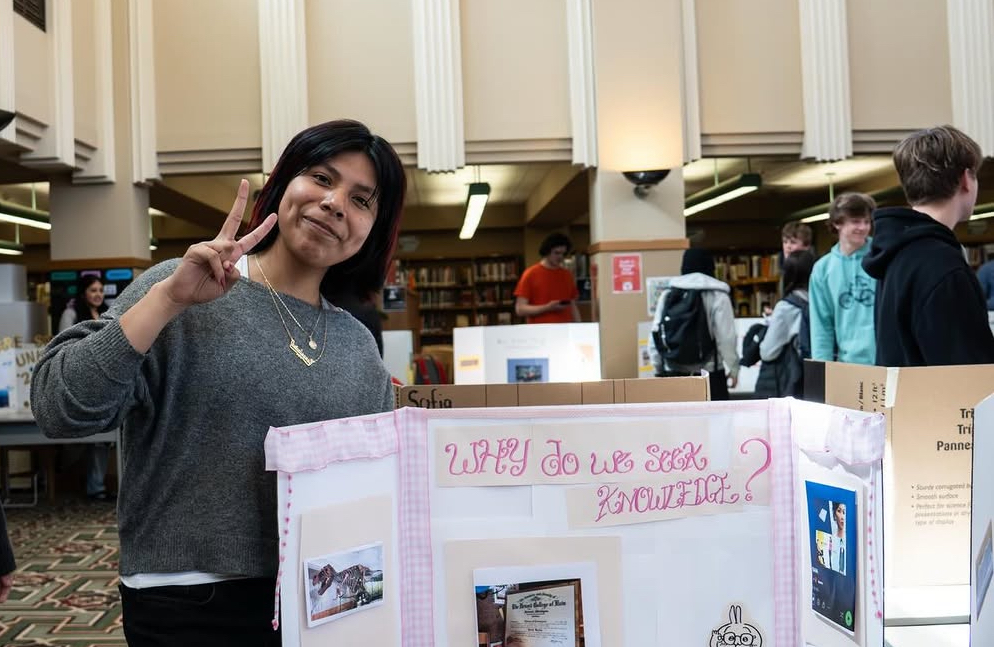
By: Sofia Escudero
On Thursday, the 9th of April, McCaskey students in the International Baccalaureate (IB) program took part in the Theory of Knowledge (TOK) exhibition. The TOK class is taught by McCaskey teacher Ms. Browning. All junior Diploma candidates (participating in the IB diploma program) had to present a project devised from the given TOK prompt list. The TOK class helps students consider how they perceive knowledge and how to critically reflect on the knowledge they claim to know. This class tends to lean on the philosophical side, where the main question to answer is: What is knowledge?
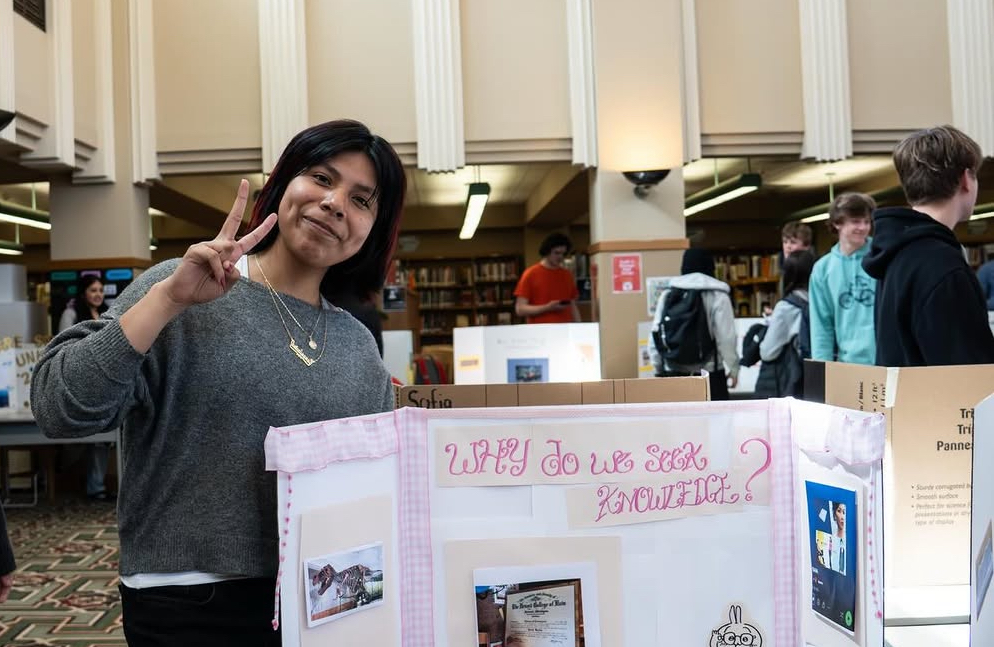
Students participating in the exhibition are not to answer this bigger, broader question, which is still discussed to this day by many philosophers, but rather students are given a choice of 35 prompts and have to answer one of the prompts with three separate objects — each a representation of an answer. These prompts tend to be very broad and up to interpretation. prompts include questions along the lines of: what is the relationship between knowledge and culture, what counts as knowledge, should some knowledge not be sought on ethical grounds, etc. Each student in the class has to pick one of these prompts to answer, but it isn’t as simple as just one answer. But it is the student’s job to find three possible answers and have one object that correlates to each individual answer. The one and only rule implemented in the class is that no student may use the same object. All presenters had their presenters. For the TOK students to be able to present their presentations, they all made their own display board with, including their prompt questions and either pictures of their objects, or they were able to bring in the real object itself.
McCaskey junior Ruby Garner-Valle took part in the exhibition and she shared insight to her own presentation “I decided to answer the prompt: What role do experts play in influencing our consumption or acquisition of knowledge? I picked this because the idea of an expert in relation to the TOK prompts is rather unique, not many other prompts include the idea of experts. Also the idea that they could be able to influence the consumption and acquisition of knowledge intrigues me.” The objects in which Ruby chose to answer this question were a selected case study for her IB Global Politics class, running gels (a performance boosting enhancement), and an anti-smoking campaign which contained animals who were smoking themselves.
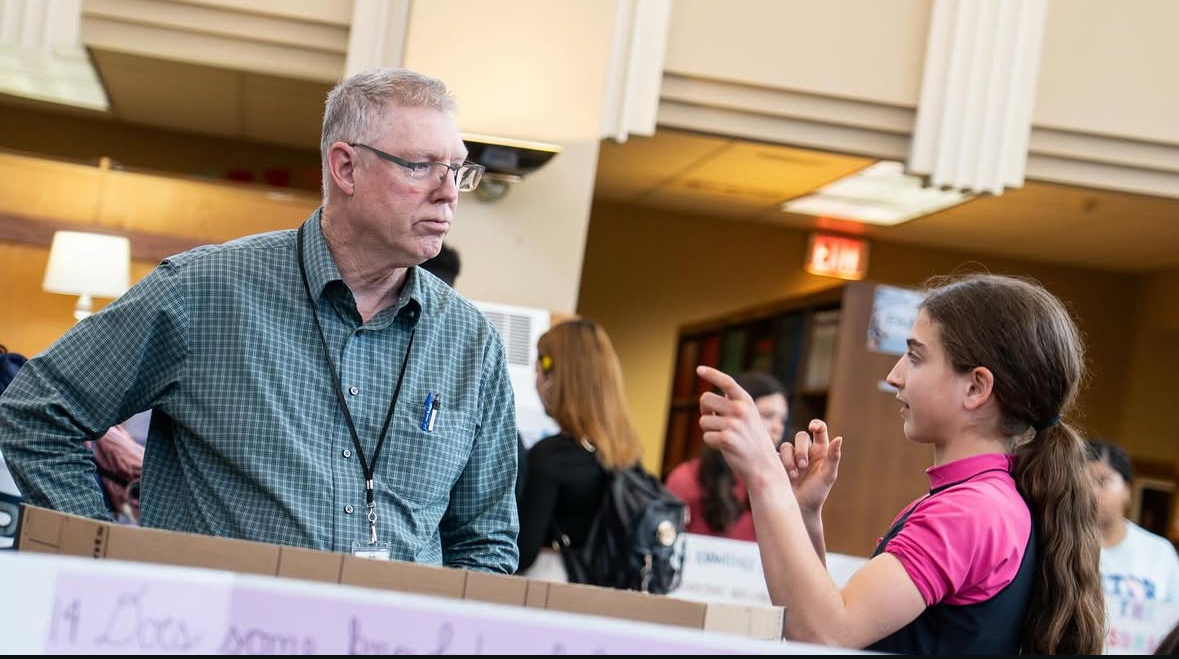
Ruby explained why she chose each object, “I chose selected studies because it shows that experts have the power to control the spread of knowledge, the teachers decide how to apply knowledge and teach it to their students. The running gel shows that experts don’t always influence knowledge because sometimes personal beliefs can override the influence an expert might have. Personally, I’ve never used a running gel because I believe they aren’t healthy. And then I also used the anti-smoking animal folder as it shows how advertising experts play a vital role in the consumption and acquisition of knowledge as the artistic design is able to persuade viewers.”
On Thursday, classes were allowed to visit the exhibition during periods 9 and 10,. Students and staff were able to walk through the exhibition as each TOK student presented their prompt and objects carefully and thoroughly.
Over 90 objects were presented that day, all representing new and different ways of understanding and reflecting upon each student’s knowledge.
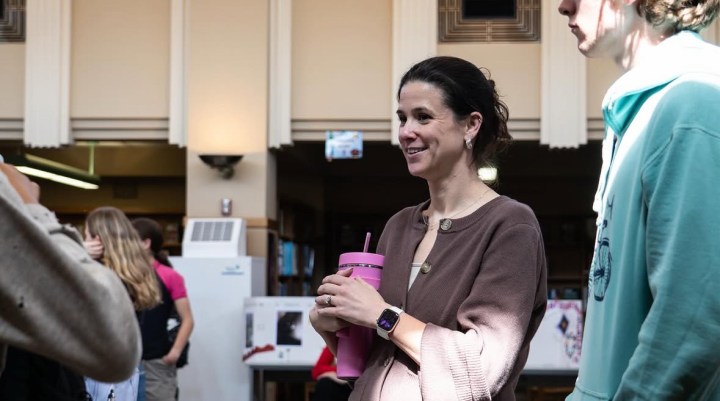
Mrs. Browning shared her praise for this year’s students. “The TOK students this year have done an amazing job in answering their questions, they all had such unique ideas and I’m very proud of them.” She shared.
McCaskey senior Jenny Ward, a student who walked through the exhibition, shared, “It was fascinating not only to learn about all these diverse topics surrounding knowledge and representations of TOK concepts, but to also be able to hear the students speak so passionately about something they spent so much of their time researching.”
The TOK exhibition was not only a great opportunity for students to learn about what TOK is, but to gather a deeper understanding of all the ways knowledge can be perceived. Knowledge is such a broad and powerful topic, and no question has just one answer. The TOK exhibition hopefully has influenced McCaskey sophomores to participate in the TOK and IB program, or even just to think twice about your knowledge of the world and to truly reflect on the deeper meaning behind it.

